

For football enthusiasts and architecture lovers alike, few structures capture the spirit of modern Paris quite like the Parc des Princes. Nestled in the 16th arrondissement, this iconic stadium is more than just the home of Paris Saint-Germain (PSG); it is a masterpiece of 20th-century design, a symbol of French prestige, and a venue that has witnessed some of the greatest moments in sporting history.
The Historic Foundations of a Parisian Icon
The "Park of Princes" takes its name from its royal origins. Long before the concrete ribs of the current stadium rose from the ground, the site was a lush parkland used by the French royal family and nobility for hunting and recreation during the 18th century.
The transition from a royal park to a sporting arena began in 1897. However, the stadium we recognize today-the third iteration on this site-was a product of the late 1960s and early 1970s. It was commissioned to replace the older velodrome and to provide Paris with a world-class venue that could host both high-level football and rugby. This transformation was part of a larger modernization effort in Paris, aimed at creating a "Périphérique" (ring road) that actually runs directly beneath the stadium's stands-a feat of engineering that remains impressive today.
The Visionaries: Architecture and Design
The current Parc des Princes is a triumph of Brutalist architecture, characterized by its bold use of reinforced concrete and avant-garde structural forms.
Lead Architect: The stadium was designed by the visionary French architect Roger Taillibert. Taillibert was renowned for his technical prowess and his ability to push the boundaries of what concrete could achieve. He later designed the Olympic Stadium in Montreal, which shares a similar aesthetic DNA with the Parc des Princes.
Construction Firm: The massive undertaking was carried out by the Bouygues construction group, one of France's most storied engineering firms.
A Modern Touch: In recent years, particularly since the QSI (Qatar Sports Investments) era of PSG began in 2011, the interior and hospitality suites have seen extensive renovations. These updates, led by Tom Sheehan (ATSP) and interior designer Jean-Philippe Nuel, blend the raw power of Taillibert's exterior with high-end Parisian luxury, making it one of the most comfortable stadiums in Europe.
The stadium officially opened its doors on June 4, 1972, and at the time, it was considered the most sophisticated stadium in the world due to its lighting and sightlines.

Capacity and the "Cauldron" Atmosphere
One of the most impressive feats of the Parc des Princes is its intimate yet intimidating atmosphere.
Total Capacity: The stadium currently holds approximately 48,000 spectators.
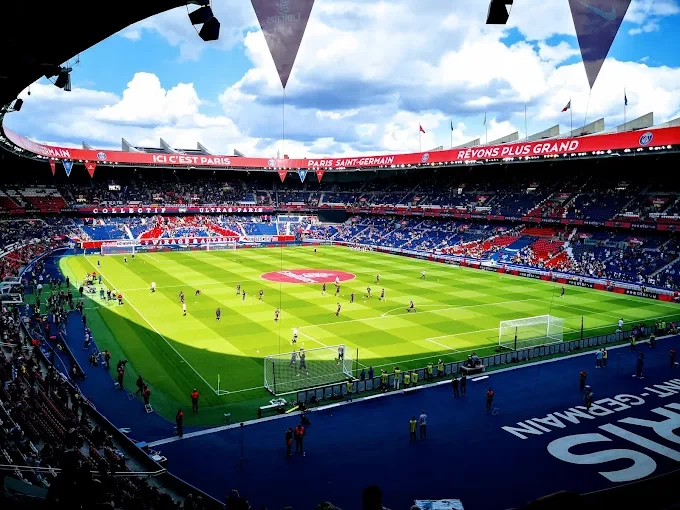
The "Cauldron" Effect: Despite being smaller than some of Europe's mega-stadiums like Camp Nou or Wembley, the design ensures that every seat has an excellent view. The "all-seater" layout and the proximity of the stands to the pitch create an intense, acoustic "cauldron." When the Collectif Ultras Paris starts chanting in the Auteuil stand, the sound bounces off the concrete roof, creating a wall of noise that can be felt in the players' chests.

Key Architectural Features: French Elegance in Concrete
What makes the Parc des Princes "extremely well-designed" is its unique structural language.
1. The Iconic Concrete Ribs
The stadium is famous for the 50 giant concrete portal frames (ribs) that support the roof. These ribs wrap around the exterior like a sculptural skeleton, eliminating the need for internal pillars. This ensures that there are no obstructed views anywhere in the stadium-a revolutionary concept in the early 70s that still sets a gold standard for stadium design.
2. Integrated Lighting
Unlike many stadiums where giant light towers loom over the pitch, Taillibert integrated the floodlights directly into the roof structure. This gives the stadium a sleek, aerodynamic silhouette that looks as futuristic today as it did fifty years ago. At night, when the stadium is lit from within, it glows like a crown on the edge of the city.
3. French Flair and "Art de Vivre"
The interior of the stadium reflects the Parisian identity. From the "Hechter" jersey-inspired seating patterns to the world-class "Skybar" and VIP lounges, the stadium bridges the gap between a gritty football arena and a high-fashion venue. It feels like a piece of Paris-sophisticated, bold, and unapologetically stylish.
A Stage for Legends: Famous Events
The Parc des Princes was the epicenter of French sports for decades. Before the Stade de France was built for the 1998 World Cup, the Parc was the primary home of the French national football and rugby teams.
UEFA European Championships: It hosted the final of Euro 1984, where Michel Platini led France to victory against Spain. It also played a key role during Euro 2016.
European Cup Finals: The stadium has hosted three European Cup (now Champions League) finals (1956, 1975, and 1981). Notably, it held the very first European Cup final in 1956 between Real Madrid and Reims.
World Cup History: It was a host venue for both the 1938 and 1998 FIFA World Cups, as well as the 2019 FIFA Women's World Cup.
PSG's Rise to Glory: Every modern legend, from Ronaldinho and Ibrahimović to Mbappé, Messi, and Neymar, has called this turf home.
The Matchday Experience: Beyond the 90 Minutes
Visiting the Parc des Princes is about more than just the football; it is a cultural ritual. On matchdays, the Boulevard Murat and the surrounding cafes of the 16th arrondissement fill with fans draped in red and blue. The smell of grilled merguez sausages and the sound of supporters singing "Ici c'est Paris" (This is Paris) create an electric environment.
Inside, fans can visit the PSG Megastore, a temple of sports fashion that showcases the club's collaborations with brands like Jordan. For those who want a deeper look, the Stadium Tour (PSG Experience) allows fans to walk through the players' tunnel, sit in the dugout, and explore the trophy room, which tells the story of the club's rapid ascent to global dominance.
Future Outlook: Expansion and Innovation
As PSG continues to grow into one of the world's biggest sports brands, there are ongoing discussions regarding the future of the Parc des Princes. While the stadium is a protected architectural landmark, the club has expressed desires to expand the capacity to 60,000, ensuring more fans can witness the magic of Parisian football while preserving Roger Taillibert's original masterpiece.
Practical Information for Visitors
Location: 24 Rue du Commandant Guilbaud, 75016 Paris.
How to Get There: The stadium is easily accessible via Metro Line 9 (Porte de Saint-Cloud) or Line 10 (Porte d'Auteuil).
Best Time to Visit: While matchdays are incomparable, a stadium tour on a non-matchday offers a better look at the architecture and "behind-the-scenes" areas.
Conclusion
The Parc des Princes is a rare example of a stadium that serves as both a high-performance sports venue and a piece of architectural art. Roger Taillibert's concrete masterpiece remains a testament to French innovation, offering a matchday experience that is as much about the beauty of the surroundings as it is about the action on the pitch. Whether you are a die-hard PSG supporter or a tourist seeking the "real" Paris, the Parc des Princes is an essential stop-a place where history, design, and passion collide under the Parisian sky.
Author Profile: Guangzhou Smart Sports Industrial Co., Ltd.


