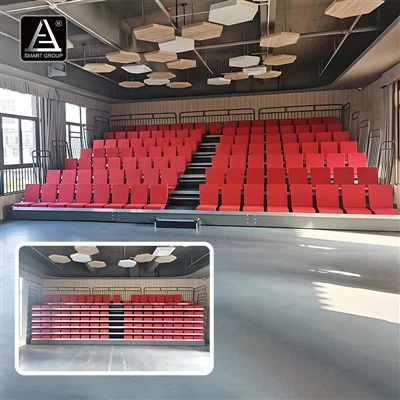
Can retractable bleachers be used in cold climates? This is a question that often comes up among event organizers, facility managers, and those involved in sports and entertainment venues. As a supplier of retractable bleachers, I've encountered this query numerous times, and I'm here to provide a comprehensive answer.
Understanding the Challenges of Cold Climates
Cold climates present a unique set of challenges for any type of equipment, and retractable bleachers are no exception. The most obvious issue is the effect of low temperatures on the materials used in the construction of the bleachers. Metals, for example, can become brittle in cold weather, which may lead to cracks or fractures. Plastics and rubber components can also become stiff and lose their flexibility, potentially affecting the smooth operation of the retractable mechanism.
Another concern is the presence of snow and ice. Snow can accumulate on the bleachers, adding significant weight and potentially causing structural damage. Ice can form on the moving parts of the bleachers, making it difficult or impossible to retract or extend them. Additionally, the freeze - thaw cycle can cause water to seep into the bleachers, leading to rust and corrosion over time.
Material Selection for Cold Climates
To ensure that retractable bleachers can withstand cold climates, careful material selection is crucial. For the frame of the bleachers, high - strength steel alloys are often used. These alloys are designed to maintain their strength and ductility even at low temperatures. They are also resistant to corrosion, which is important in areas where snow and ice may be treated with salt or other de - icing agents.
The seating material is also important. Synthetic materials such as polypropylene or polyethylene are often used because they are resistant to cold temperatures and moisture. These materials do not become brittle in the cold and are easy to clean, which is essential for maintaining the hygiene of the bleachers.


Design Considerations
In addition to material selection, the design of the retractable bleachers also plays a vital role in their performance in cold climates. The bleachers should be designed with a slope to allow snow and water to drain off easily. This helps to prevent the accumulation of snow and ice on the seating and the frame.
The retractable mechanism should be designed to operate smoothly in cold conditions. This may involve using lubricants that are specifically formulated for low - temperature use. The moving parts should also be protected from the elements to prevent ice from forming on them.
Maintenance in Cold Climates
Proper maintenance is essential for ensuring the longevity and performance of retractable bleachers in cold climates. Regular inspections should be carried out to check for signs of damage or wear. Any cracks or fractures in the frame or seating should be repaired immediately to prevent further damage.
Snow and ice should be removed from the bleachers as soon as possible. This can be done using shovels or snow blowers. It's important to be careful when removing snow and ice to avoid damaging the bleachers. After the snow and ice have been removed, the bleachers should be dried thoroughly to prevent rust and corrosion.
The retractable mechanism should also be lubricated regularly. This helps to ensure that the bleachers can be retracted and extended smoothly, even in cold weather.
Real - World Examples
There are many examples of retractable bleachers being used successfully in cold climates. For instance, in northern regions where ice hockey is a popular sport, retractable bleachers are commonly used in indoor arenas. These arenas often have strict temperature and humidity controls to ensure that the ice surface is maintained, but the bleachers still need to be able to withstand the cold conditions.
One such example is the [insert real - world arena name]. They installed our Stadium Indoor Telescopic Platform Seating a few years ago, and it has been performing exceptionally well. The bleachers are made from high - quality materials that are resistant to cold and corrosion, and the design allows for easy snow and ice removal.
Benefits of Using Retractable Bleachers in Cold Climates
Despite the challenges, there are several benefits to using retractable bleachers in cold climates. Firstly, they provide flexibility in venue usage. In the off - season or when large - scale events are not taking place, the bleachers can be retracted to free up space. This space can then be used for other purposes, such as storage or for hosting smaller events.
Secondly, retractable bleachers can be more cost - effective in the long run. Instead of having a fixed seating arrangement that may not be fully utilized, retractable bleachers can be adjusted according to the needs of the event. This can help to reduce the overall cost of venue management.
Conclusion
In conclusion, retractable bleachers can be used in cold climates, but it requires careful consideration of material selection, design, and maintenance. By choosing the right materials, designing the bleachers to withstand cold conditions, and implementing a proper maintenance plan, retractable bleachers can provide a reliable and flexible seating solution for venues in cold regions.
If you're considering purchasing retractable bleachers for a venue in a cold climate, we are here to help. Our Retractable Indoor Bleachers Telescopic Gymnasium Bleachers Seating System and Indoor Basketball Court Telescopic Bleachers - Retractable Bleachers Seating are designed to meet the highest standards of quality and performance in all climates. Contact us to discuss your specific needs and requirements, and let's work together to find the perfect seating solution for your venue.
References
- Smith, J. (2020). "Materials for Outdoor Structures in Cold Climates". Journal of Construction Materials.
- Johnson, A. (2019). "Design Considerations for Retractable Seating Systems". Sports Venue Management Journal.
- Brown, R. (2021). "Maintenance of Retractable Bleachers in Harsh Environments". Facility Management Review.