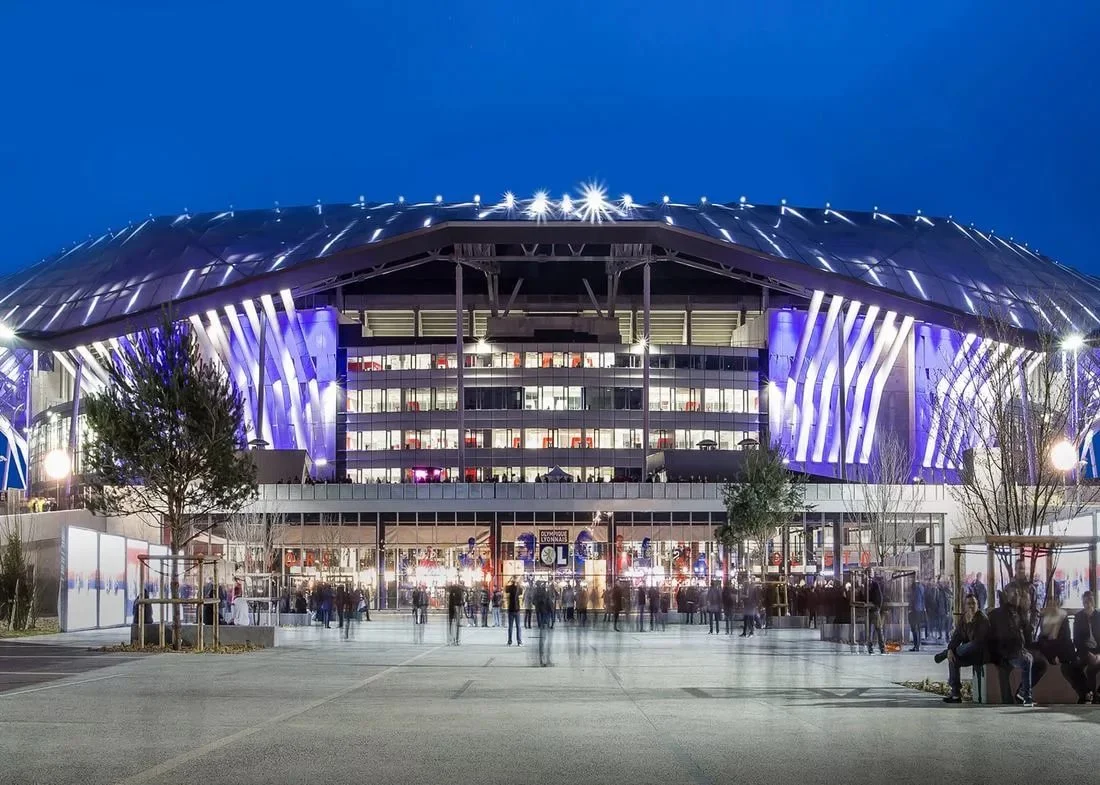
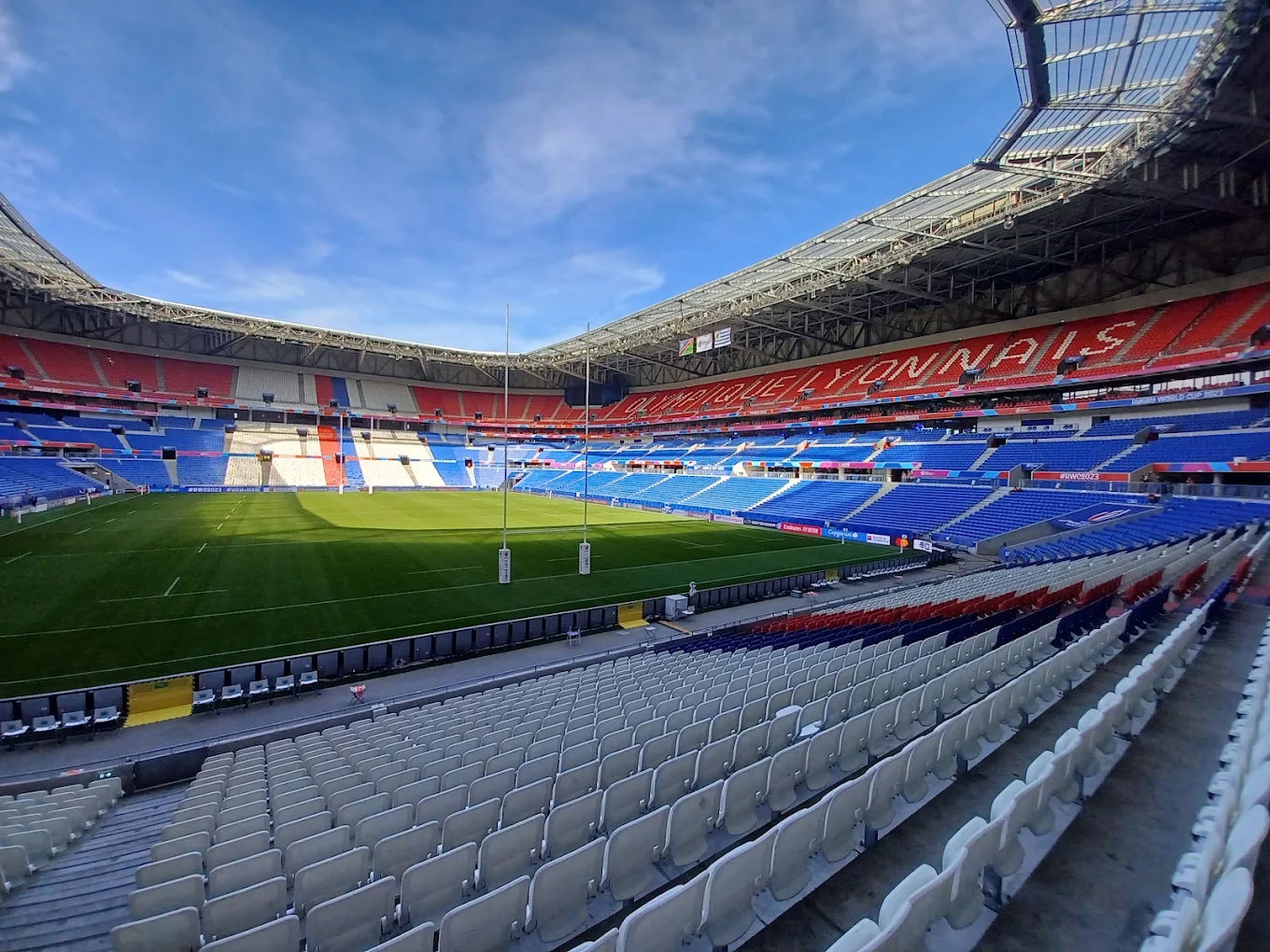
Groupama Stadium, also known as Parc Olympique Lyonnais or Parc OL, is one of France's leading modern football venues. Located in Décines-Charpieu in the Lyon metropolitan area, it is the home ground of Olympique Lyonnais and a destination for major sporting and entertainment events. With a capacity of 59,186 spectators, premium hospitality facilities and a roofed seating bowl, the stadium offers useful reference points for developers planning contemporary sports venues.
Construction Background and Project Team
The project was developed to give Olympique Lyonnais a purpose-built home suited to top-level European football and international events. Construction began on 22 October 2012 and was completed in December 2015. The stadium opened on 9 January 2016, when Olympique Lyonnais defeated Troyes AC 4–1. The reported project cost was approximately €410 million.
International sports architecture practice Populous designed the stadium, while VINCI Construction France was the construction contractor. The project required coordination across architecture, structural engineering, spectator circulation, hospitality and venue operations. Its scale also called for careful planning of vehicle access, public transport connections, service delivery and the movement of large crowds before and after matches. For project teams, these interfaces are as important as the visible stadium design.
Originally referred to as Parc OL or Parc Olympique Lyonnais, the venue later adopted the name Groupama Stadium through a naming-rights agreement. It is closely associated with Olympique Lyonnais and the club's wider sports and entertainment ambitions.

Capacity, Seating and Main Features
Groupama Stadium can accommodate 59,186 spectators. Its premium offering includes approximately 6,000 business seats, including 105 skyboxes, while around 350 places are designated for spectators with disabilities.
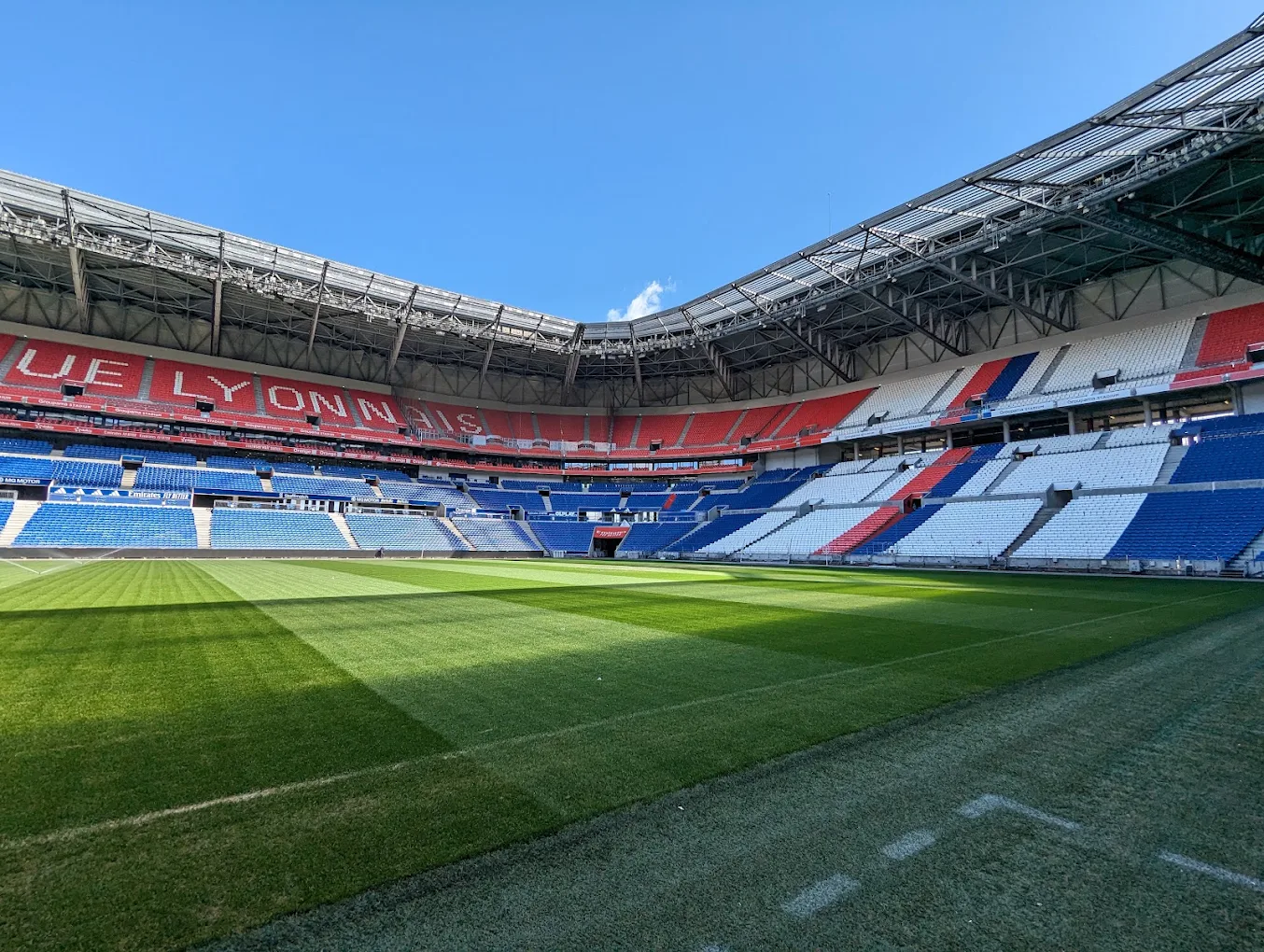
The seating bowl is arranged around the pitch in four principal stand areas: north, south, east and west. The bowl-style layout brings spectators close to the field and creates an enclosed atmosphere for football and other major events. A roof canopy covers the spectator stands, helping protect audiences from rain and giving the stadium a unified visual profile. The combination of seating bowl and canopy also shows how the structural concept influences spectator comfort, stadium identity and the experience of televised events.
For stadium developers, this type of venue demonstrates the importance of integrating seating capacity with sightlines, safe access and egress, roof design, accessibility and back-of-house operations. A grandstand is not simply a set of seats; it must work with the pitch, concourses, entrances and service areas. Projects must also consider durability, maintenance access, weather, crowd flow and the sports scheduled to use the facility.
The stadium's record attendance was 57,582, recorded for Olympique Lyonnais versus Paris Saint-Germain on 21 January 2018.
Major Sporting Events Hosted
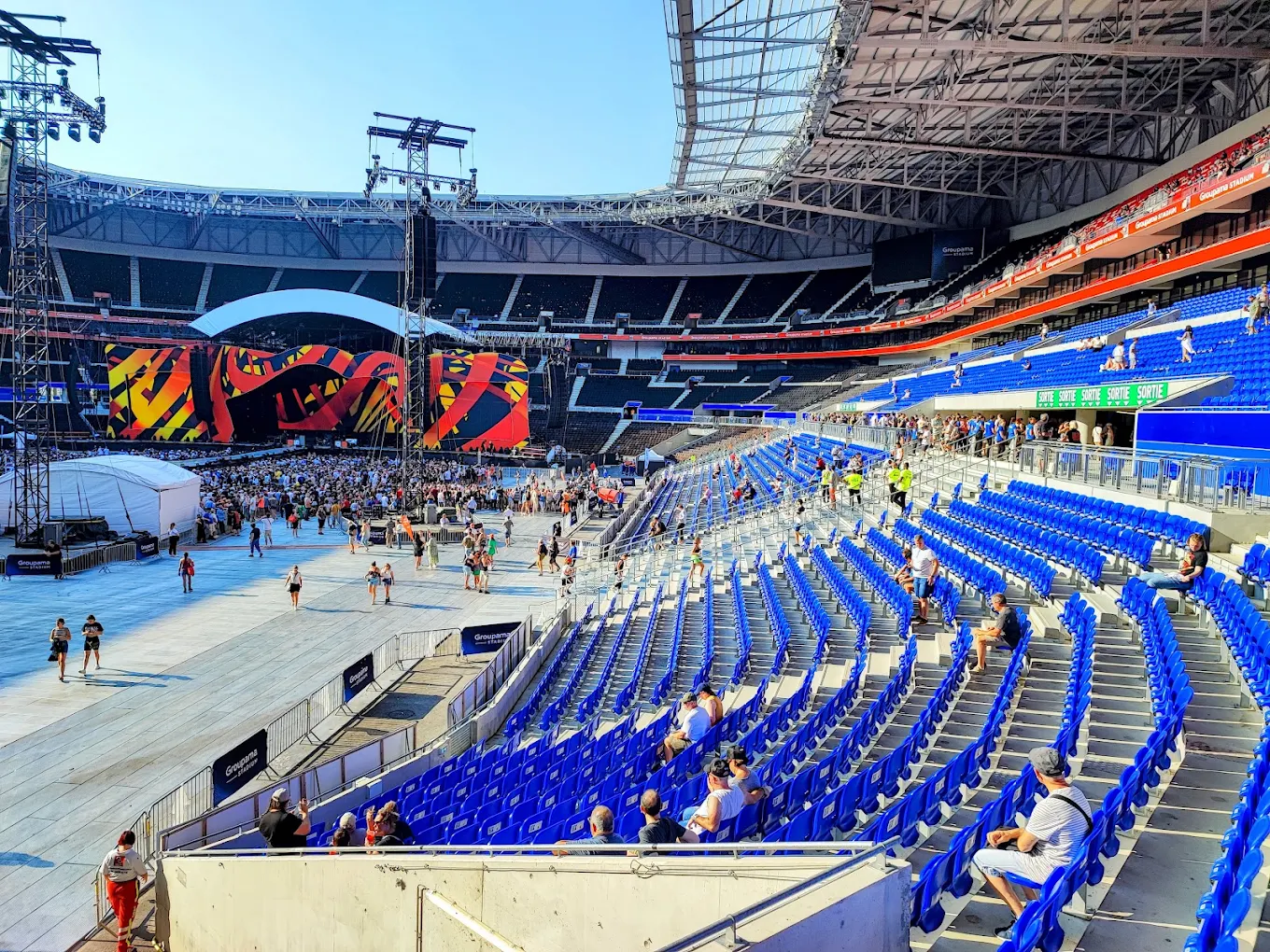
Groupama Stadium has hosted significant events beyond Olympique Lyonnais home matches. It was one of the venues for UEFA Euro 2016, welcoming international teams and supporters during France's hosting of the tournament. The stadium later became a key venue for the 2019 FIFA Women's World Cup, including the final between the United States and the Netherlands. It also hosted the 2018 UEFA Europa League Final, when Atlético Madrid played Olympique de Marseille.
The venue also hosted matches during the 2023 Rugby World Cup and the football tournament at the Paris 2024 Olympic Games. This range of events demonstrates the value of planning stadium infrastructure for different competition formats. International events can bring varied operational needs, media demands, security arrangements and visitor flows, making flexibility and careful facility management important from the design stage.
Olympique Lyonnais: The Club Behind the Stadium
Olympique Lyonnais, commonly known as OL or Lyon, is a prominent French professional football club based in the Lyon region. The club won seven consecutive Ligue 1 titles from 2002 to 2008, while its men's and women's teams have built an international profile.
A purpose-built stadium gives a club a permanent setting for league fixtures, cup matches, continental competitions and commercial activities. For Lyon, Groupama Stadium provides a home for supporters while also supporting hospitality, sponsorship, concerts and other large-scale events.
Lessons for Stadium Project Buyers
Groupama Stadium shows how seating, roof structures, accessibility, hospitality and event operations need to be planned as one system. For new stadiums, training grounds, sports centres and municipal venues, project teams must balance capacity, budget, maintenance and local requirements. The most suitable grandstand solution depends on the site, expected attendance, weather conditions, applicable standards and whether the project requires permanent, modular or retractable seating.
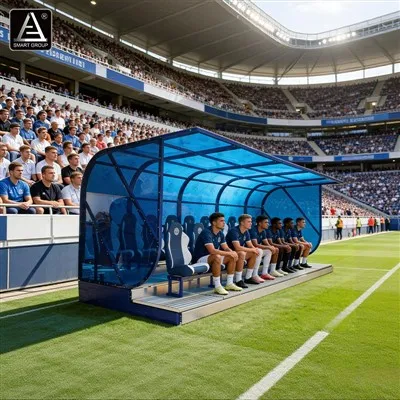
As a China-based supplier of integrated sports facility solutions, SMART GROUP supports global clients with products and coordination for spectator seating and sports venues. Depending on project requirements, solutions may include grandstands, stadium seats, retractable seating, team shelters and complementary sports facility components. Early technical review helps owners and designers align layouts, capacity targets, materials, access provisions and installation planning before procurement. For projects with tight sites or mixed-use schedules, modular or retractable seating may also help balance audience requirements with the need to preserve floor space for other activities.
For stadium builders, architecture and engineering firms, contractors and government sports procurement teams, Groupama Stadium is a useful case study in delivering a venue designed for major competitions and year-round use. Successful sports infrastructure depends on coordinated design, reliable construction, thoughtful spectator planning and fit-for-purpose equipment. With project-specific planning and specialist support, SMART GROUP aims to help clients develop functional, durable sports facilities for different markets and levels of competition.
Author Profile: SMART GROUP - Global Sports Facility Solution Provider