Company Overview: A Global Leader in Architectural Design
Herzog & de Meuron is an internationally recognized architectural practice headquartered in Basel, Switzerland. Founded in 1978 by architects Jacques Herzog and Pierre de Meuron, the firm has developed a distinctive approach to architecture that combines material innovation, structural expression, cultural identity, and sensitivity to the surrounding environment.
Official Website: https://www.herzogdemeuron.com
Although the firm is widely known for its landmark sports stadiums, its portfolio extends far beyond sports. It includes cultural institutions, museums, residential developments, educational facilities, public buildings, and major urban regeneration projects.
For stadium developers, government authorities, architectural consultants, and construction companies, Herzog & de Meuron offers valuable insights into how large-scale sports facilities can become more than venues for competition. Their projects demonstrate how architecture, engineering, spectator experience, and urban development can work together to create long-term public assets.
Core Expertise: Integrating Sports, Architecture, and Public Space
Herzog & de Meuron approaches each project according to its specific location, functional requirements, and cultural context. Rather than applying a standardized stadium design, the firm explores how building form, materials, circulation, and public spaces can respond to the needs of each development.
Its sports-related expertise includes large-capacity stadiums, professional football venues, multipurpose sports facilities, and the transformation of existing urban environments.
For stadium owners and public-sector clients, several aspects of this approach are particularly relevant.
Architectural identity: A stadium can become a recognizable city landmark, strengthening local identity and supporting tourism, cultural activities, and commercial development.
Spectator experience: Seating layouts, sightlines, circulation routes, entrances, concourses, and hospitality areas must work together to provide a comfortable and efficient visitor experience.
Engineering coordination: Complex stadium projects require close collaboration among architects, structural engineers, building-services consultants, specialist contractors, and sports facility suppliers.
Long-term adaptability: Flexible event spaces, maintainable materials, efficient operations, and opportunities for future upgrades can help owners maximize the value of their investment.
These considerations are especially important for government-funded sports infrastructure, where public accessibility, operational efficiency, safety, and lifecycle costs are often as significant as architectural appearance.

Representative Sports Stadium Projects
Beijing National Stadium, China
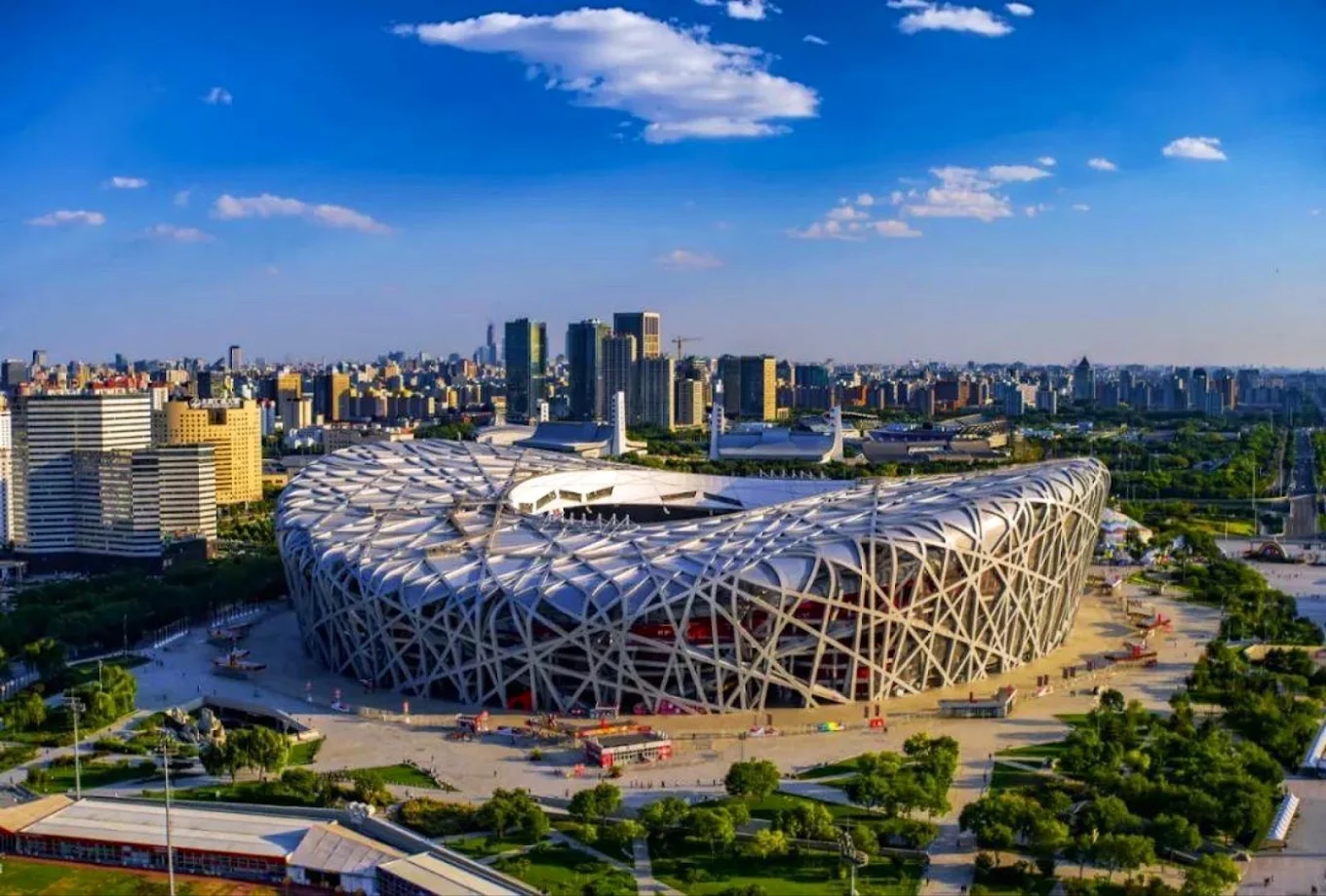
The Beijing National Stadium, widely known as the Bird's Nest, was designed by Herzog & de Meuron in collaboration with Chinese architect Li Xinggang and his team at China Architecture Design & Research Group, together with artist Ai Weiwei as artistic consultant. Developed for the 2008 Olympic Games, it is one of the most recognizable sports structures in the world.
Its distinctive interwoven steel structure creates a powerful architectural identity while accommodating the functional requirements of a major international sports venue.
For stadium developers and engineering consultants, the project illustrates the importance of integrating structural design, spectator circulation, seating systems, event operations, and architectural expression from the earliest planning stages.
Allianz Arena, Munich, Germany
Herzog & de Meuron designed Allianz Arena, which opened in 2005. Its illuminated exterior, composed of air-filled ETFE panels, gives the stadium a distinctive appearance that can change color according to the event or home team.
Beyond its visual impact, the project demonstrates how an innovative building envelope can contribute to a venue's identity and visitor experience.
For investors and project managers, Allianz Arena highlights the importance of coordinating façade systems, structural engineering, lighting, maintenance access, and stadium operations. It also shows how a sports venue can establish a strong commercial identity without relying solely on its sporting events.
St. Jakob-Park, Basel, Switzerland
St. Jakob-Park is another important sports project associated with Herzog & de Meuron. Opened in 2001 and subsequently expanded, the stadium combines football facilities with commercial and public functions.
Its integration into the urban environment illustrates how stadium developments can support activities beyond match days. For municipalities and public investment authorities, this approach offers useful lessons in land use, accessibility, mixed-use planning, and the long-term utilization of sports infrastructure.

Why Stadium Developers and Government Buyers Should Study the Firm
For government procurement departments, private stadium investors, and sports facility development companies, the value of Herzog & de Meuron lies not only in its architectural reputation but also in its approach to complex project coordination.
A successful stadium requires more than an impressive exterior. It must meet capacity requirements, provide appropriate sightlines, accommodate accessible routes, satisfy applicable building and fire regulations, and support reliable operation and maintenance.
Procurement teams should therefore evaluate architectural proposals alongside structural performance, seating capacity, construction feasibility, lifecycle costs, and the availability of qualified specialist contractors.
For public projects, early coordination between the design team and procurement department can also help establish clear technical specifications, quality-control procedures, delivery responsibilities, and maintenance requirements.

Opportunities for Sports Facility Suppliers and Engineering Partners
For companies supplying stadium seating, grandstands, aluminum bleachers, retractable seating, sports flooring, lighting, or other venue equipment, projects associated with leading architectural practices offer an important lesson: specialist products must be coordinated with the overall architectural and engineering design.
Potential cooperation may involve providing technical drawings, product specifications, material samples, structural calculations, compliance documentation, customized seating solutions, and installation support.
However, Herzog & de Meuron should not automatically be treated as the direct purchaser of every product used in its projects. Procurement responsibilities may belong to the project owner, construction contractor, engineering consultant, specialist subcontractor, or designated sports facility integrator.
Suppliers seeking cooperation should identify the actual project stakeholders and understand the procurement structure before approaching a potential partner.
As a China-based supplier of integrated sports facility solutions, SMART GROUP can contribute to project discussions involving stadium seating, grandstand systems, and customized sports infrastructure by providing project-specific technical information and coordinating with relevant design and construction teams.
Conclusion: Architecture That Creates Lasting Value
Herzog & de Meuron demonstrates how sports architecture can combine engineering complexity, distinctive design, and public value. Its projects provide useful reference points for stadium developers, government authorities, architectural firms, engineering consultants, and specialist suppliers seeking to deliver high-quality sports infrastructure.
For organizations planning a new stadium or upgrading an existing venue, studying the firm's work can help clarify the relationship between architectural vision, technical coordination, spectator experience, and long-term operational performance.
Author Profile: SMART GROUP - Global Sports Facility Solution Provider