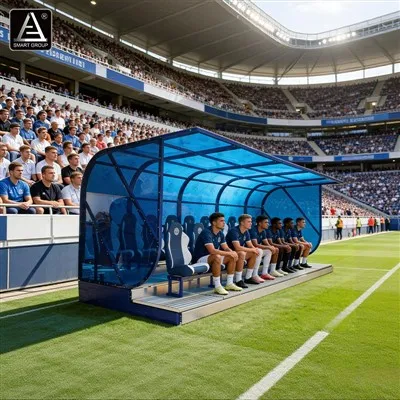
Understanding Zinc Coating Thickness for Long-Lasting Steel Grandstand Structures
Steel grandstands are widely used in sports stadiums, football fields, racing circuits, outdoor event venues and other public facilities. As large-scale outdoor structures, they are frequently exposed to rain, humidity, temperature fluctuations, UV radiation and other environmental conditions. Over time, these factors can cause corrosion, affecting the structural durability, maintenance requirements and service life of steel components.
Hot-dip galvanizing is one of the most widely used corrosion protection methods for steel grandstands. By immersing fabricated steel components in molten zinc, a protective zinc coating forms on the steel surface, helping prevent corrosion and extend the service life of the structure.
However, an important question for international project owners, contractors and procurement professionals is: How thick should the zinc coating be?
Different countries and regions follow different galvanizing standards. Understanding the differences between Chinese, American and European requirements helps buyers establish appropriate technical specifications for steel grandstand projects.
Chinese Hot-Dip Galvanizing Standard
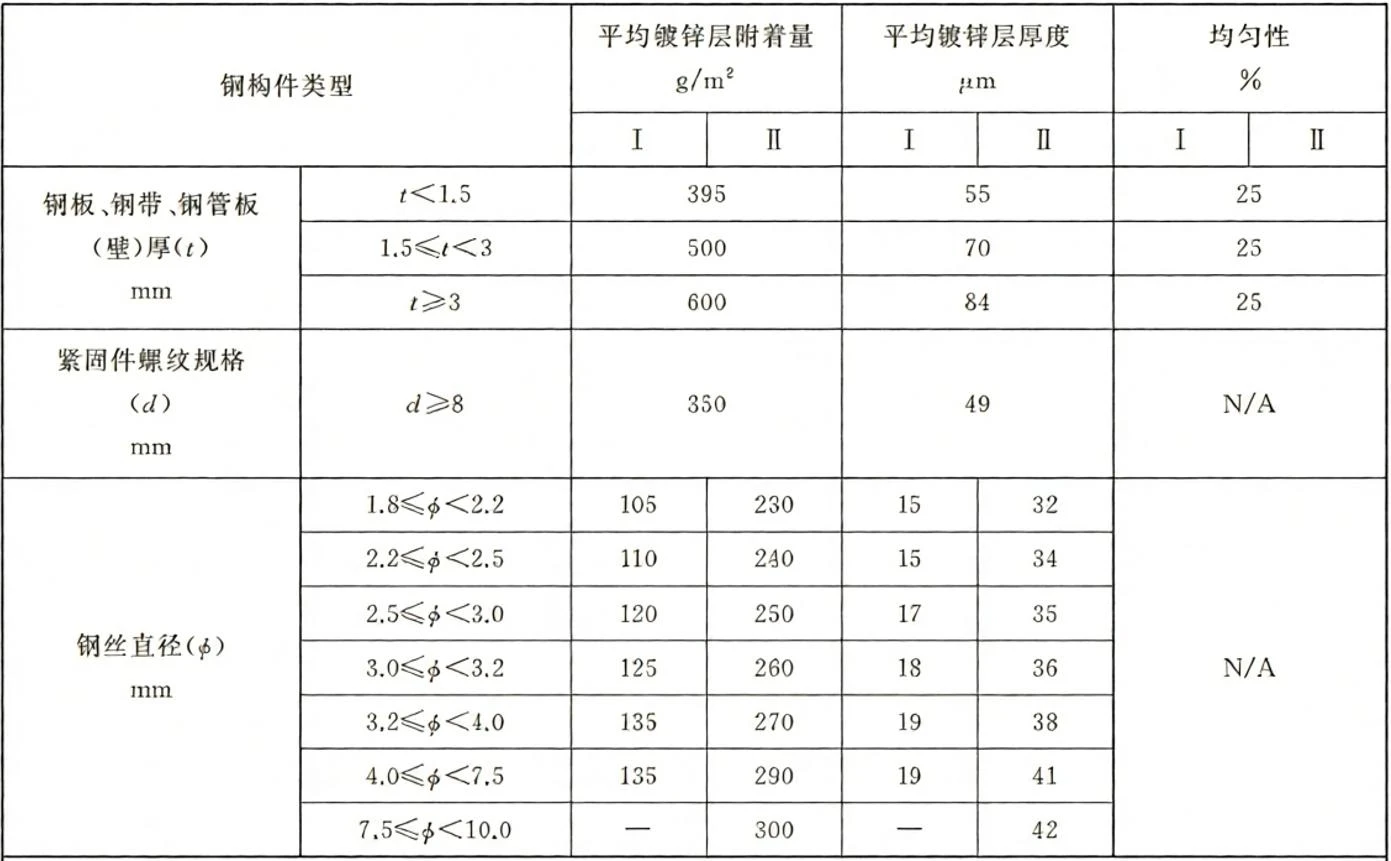
One important reference for Chinese galvanizing requirements is GB/T 18226-2025 – Specifications for Anticorrosion Technology of Highway Traffic Engineering Steel Components.
For a zinc coating mass of 600 g/m², the theoretical average coating thickness can be calculated using the density of zinc, approximately 7.14 g/cm³.
The conversion formula is:
Zinc Coating Thickness (μm) = Zinc Coating Mass (g/m²) ÷ 7.14
Therefore:
600 ÷ 7.14 ≈ 84 μm
This means that a zinc coating mass of 600 g/m² corresponds to an average theoretical coating thickness of approximately 84 μm.
If a project adopts a ±25% coating uniformity control range, the corresponding values are:
● Lower control value: 84 × (1 - 25%) = 63 μm
● Upper control value: 84 × (1 + 25%) = 105 μm
These figures illustrate how coating mass can be translated into coating thickness for quality control.
For steel grandstand manufacturers, this type of measurement provides a useful reference when evaluating the corrosion protection of columns, beams, support frames, connecting plates and other structural components.
Actual acceptance criteria should always follow the applicable standard, product category and project specifications.
American Hot-Dip Galvanizing Standards
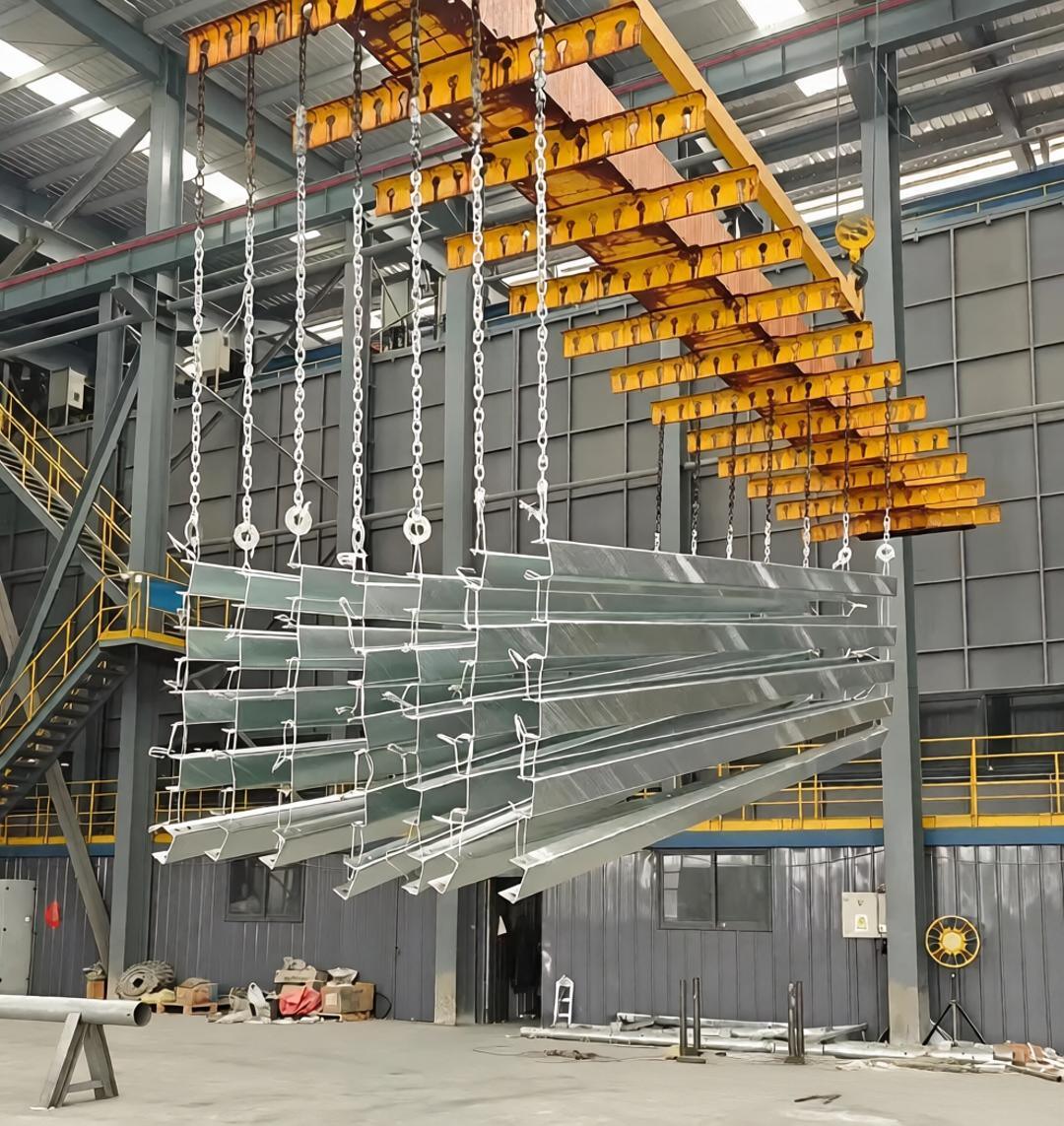
In the United States, ASTM A123 – Standard Specification for Zinc (Hot-Dip Galvanized) Coatings on Iron and Steel Products is a major reference for hot-dip galvanized fabricated steel products.
For highway guardrail applications, AASHTO M180 – Corrugated Sheet Steel Beams for Highway Guardrail provides another relevant technical reference.
These standards specify coating requirements according to factors such as steel product category, material thickness and testing method.
AASHTO M180 uses ounces per square foot (oz/ft²) to express zinc coating mass. This is an imperial measurement unit commonly encountered in American galvanizing specifications.
The basic conversion relationships are:
● 1 oz/ft² ≈ 305.15 g/m²
● 1 g/m² ≈ 0.00328 oz/ft²
● 1 μm of zinc ≈ 7.14 g/m²
● 1 oz/ft² ≈ 42.7 μm of zinc
For reference, a zinc coating mass of approximately 600 g/m² is equivalent to 1.97 oz/ft² and approximately 84 μm.
It is important to understand that ASTM A123 and AASHTO M180 have different application scopes. Their coating requirements should not be treated as interchangeable. Engineers and buyers should refer to the specific material category and applicable standard when preparing project specifications.
Another important consideration is coating uniformity. Achieving a zinc coating that is smooth, consistent and adequately distributed across complicated steel components requires appropriate pretreatment, galvanizing temperature control, immersion procedures and production experience.
European Hot-Dip Galvanizing Standard
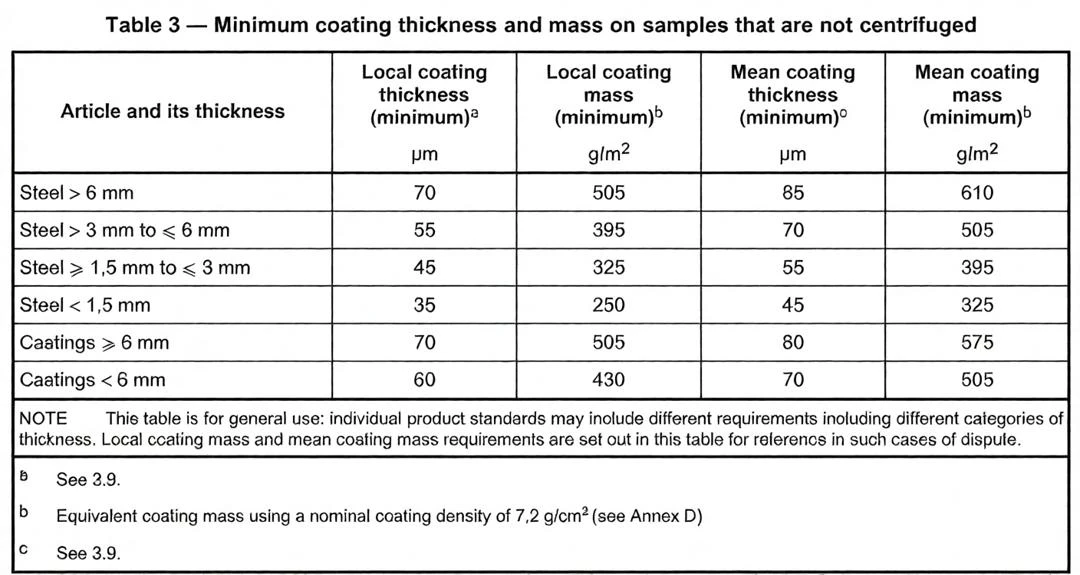
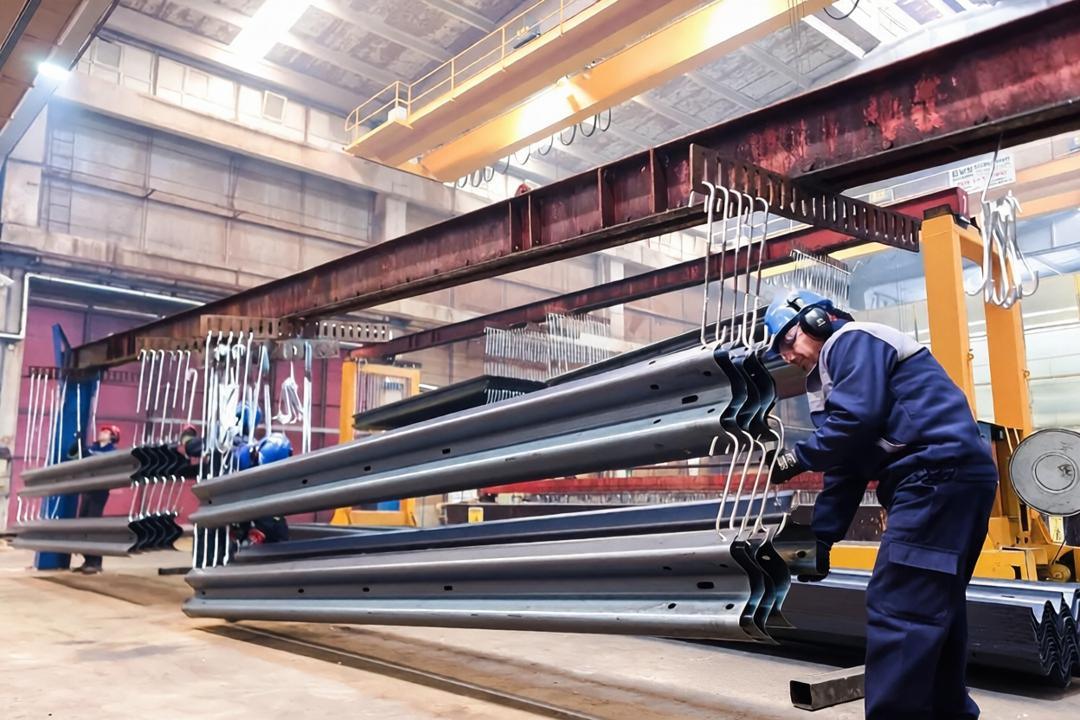
In Europe, EN ISO 1461 – Hot Dip Galvanized Coatings on Fabricated Iron and Steel Articles – Specifications and Test Methods is a widely recognized reference.
Unlike specifications that primarily express coating mass, EN ISO 1461 establishes minimum local and mean coating thickness requirements according to the thickness of the steel material.
For commonly encountered steel thickness categories, the requirements include:
| Steel Thickness | Minimum Local Thickness | Minimum Mean Thickness |
|---|---|---|
| More than 1.5 mm up to 3 mm | 45 μm | 55 μm |
| More than 3 mm up to 6 mm | 55 μm | 70 μm |
| More than 6 mm | 70 μm | 85 μm |
For example, when galvanized steel plates have a thickness of 4 mm, the minimum local zinc coating thickness is 55 μm, while the minimum mean coating thickness is 70 μm.
These values demonstrate that European galvanizing requirements vary according to the thickness of the base steel.
For steel grandstand projects in Europe, understanding EN ISO 1461 is particularly useful when specifying galvanized structural frames, steel plates, brackets and other fabricated components.
Comparison of Chinese, American and European Standards
Although these standards share the same objective of protecting steel against corrosion, they differ in measurement units, product classifications, testing methods and acceptance requirements.
The following conversion table provides a convenient reference for international buyers:
| Zinc Thickness (μm) | Zinc Mass (g/m²) | Zinc Mass (oz/ft²) |
|---|---|---|
| 45 | 321.3 | 1.05 |
| 55 | 392.7 | 1.29 |
| 63 | 449.8 | 1.47 |
| 70 | 499.8 | 1.64 |
| 77 | 549.8 | 1.80 |
| 84 | 599.8 | 1.97 |
| 85 | 606.9 | 1.99 |
| 105 | 749.7 | 2.46 |
Note: These are theoretical conversions based on a zinc density of 7.14 g/cm³. Actual coating measurements may vary due to coating composition, surface condition and measurement methods. Coating mass requirements may also refer to one surface or both surfaces depending on the applicable product standard.
For international steel grandstand projects, selecting a galvanizing specification should not simply involve choosing the highest numerical value. The correct standard, steel thickness, structural design, exposure environment and project requirements must all be considered.
Why Galvanizing Quality Matters for Steel Grandstands
Steel grandstands are long-term infrastructure investments. Their structural components must withstand not only spectator loads and environmental forces but also years of outdoor exposure.
A properly specified hot-dip galvanized coating provides several important benefits:
● Improved Corrosion Resistance
The zinc layer acts as a protective barrier and provides sacrificial protection to exposed steel areas, helping reduce the risk of corrosion.
● Reduced Maintenance Requirements
Appropriate galvanizing protection can reduce the frequency of repainting and corrosion-related maintenance, particularly in outdoor sports facilities.
● Long-Term Structural Protection
Columns, beams, bracing systems, staircases and connection components all contribute to the overall stability of a grandstand. Protecting these components against corrosion is an important part of long-term structural management.
● Better Suitability for Different Environments
Different projects have different exposure conditions. Coastal locations, humid regions and industrial environments may require more careful corrosion protection planning.
SMART GROUP: Steel Grandstand Solutions for International Sports Projects
With extensive experience in sports facility engineering and manufacturing, SMART GROUP provides integrated steel grandstand solutions for sports stadiums, football fields, racing circuits, schools and multipurpose venues.
Our steel grandstand systems can be customized according to project requirements, including seating capacity, structural configuration, roof design, access stairs, guardrails, seating arrangements and surface protection treatments.
For international projects, material selection and corrosion protection specifications should be coordinated with the applicable local standards and engineering requirements. Hot-dip galvanizing, protective coatings and other suitable treatments can be considered according to the project environment and structural design.
From initial planning and structural design to manufacturing, transportation and installation guidance, SMART GROUP supports customers throughout the sports facility development process.
We believe that the quality of a steel grandstand is not determined by its appearance alone. Structural safety, material performance, corrosion protection and manufacturing quality all contribute to a reliable sports facility.
Choosing the right galvanizing standard is an important step toward building steel grandstands that deliver long-term performance, durability and value.
Author:SMART GROUP - Global Sports Facility Manufacturer & Integrated Project Solution Provider