The global football landscape is shifting its gaze toward the horizon of 2026. Following the historic announcement by FIFA regarding the official match schedule, the roadmap for the FIFA World Cup 26™ is now etched in stone. This tournament is not merely a continuation of a quadrennial tradition; it represents a monumental evolution of the beautiful game. Spanning three nations-Canada, Mexico, and the United States-the 2026 edition will be the most inclusive, expansive, and logistically ambitious sporting event ever staged.
The Grand Opening: A Return to the Cathedral of Football
The journey begins on June 11, 2026, at a venue that breathes football history: the Estadio Azteca in Mexico City. By hosting the opening match, the Azteca becomes the first stadium in history to welcome three separate FIFA World Cup opening ceremonies (1970, 1986, and 2026). For the Mexican national team, playing the inaugural match on home soil provides a spiritual advantage, reigniting the passion of a nation that considers football a core pillar of its identity.
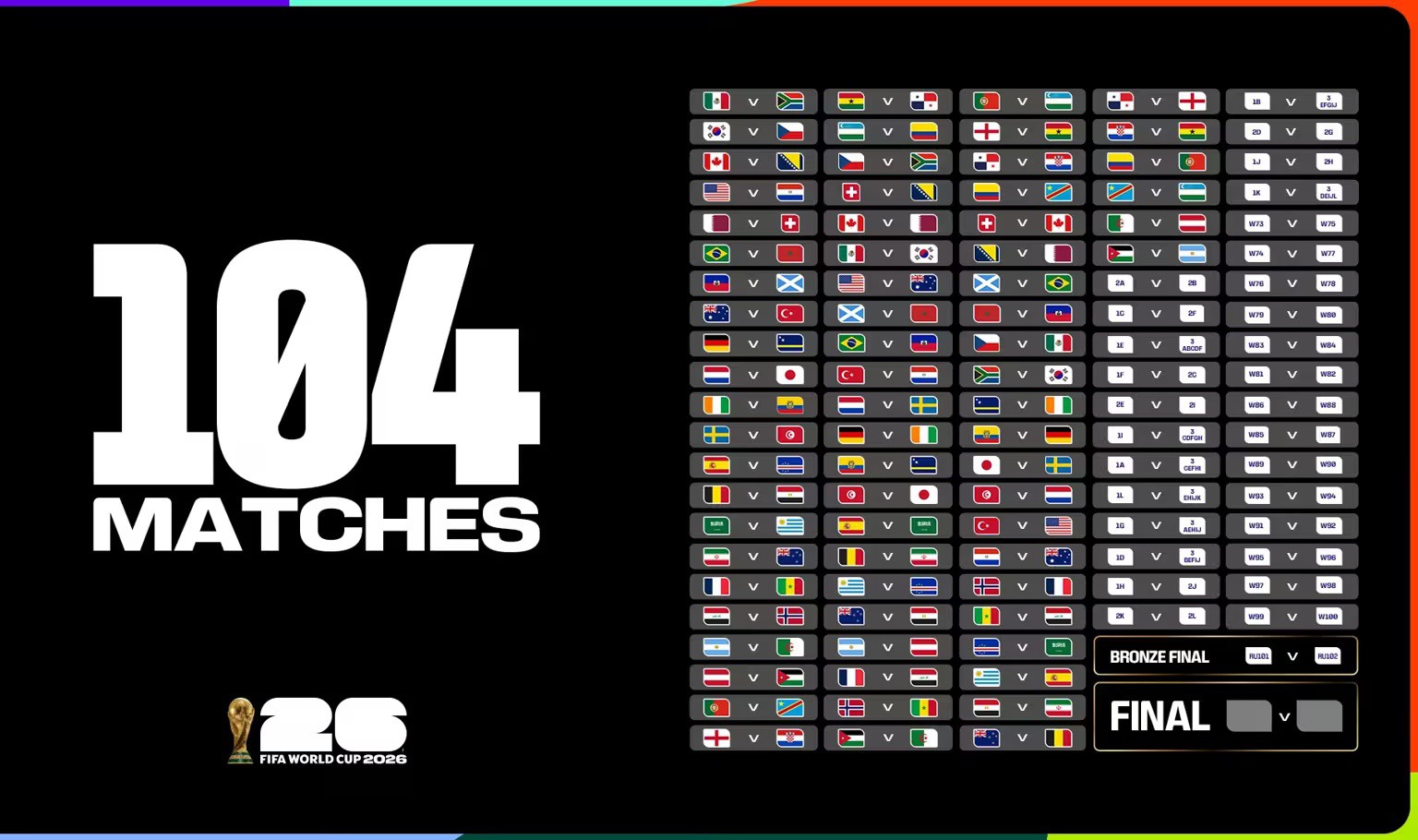
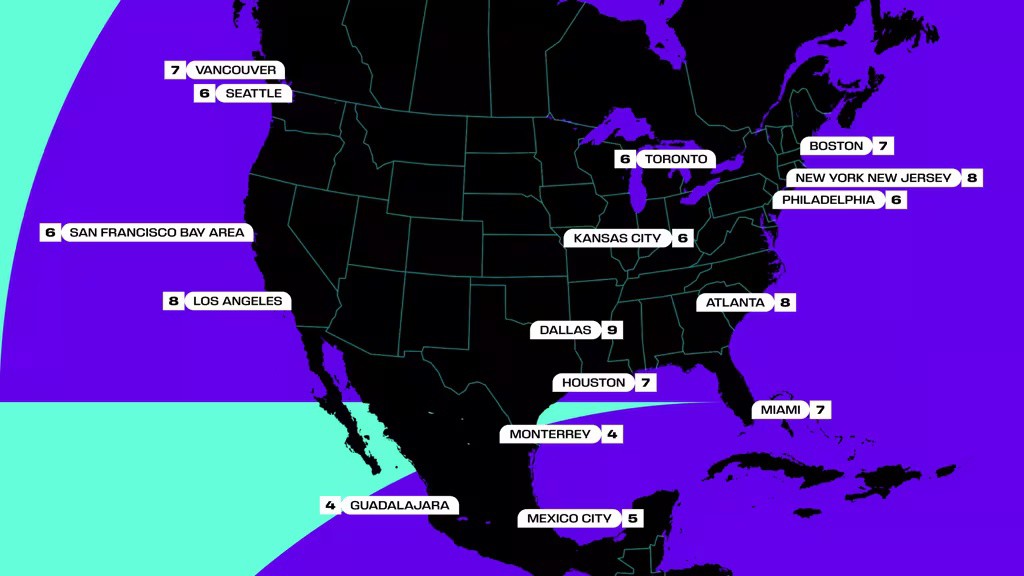
"104 matches. 16 cities. 48 teams. The scale of 2026 is unprecedented in the history of professional sports."
A Tri-National Tapestry: 16 Host Cities
The tournament's footprint covers nearly the entire North American continent, strategically divided into Western, Central, and Eastern regions to manage the immense travel requirements. This geographical diversity ensures that the "World Cup fever" is felt from the Pacific coast to the Atlantic shores.
· The United States: 11 Portals to Glory The U.S. anchors the tournament with 11 host cities. Major markets like Los Angeles (SoFi Stadium) and Miami (Hard Rock Stadium) will serve as focal points. Notably, Dallas (AT&T Stadium) has been awarded the highest volume of matches-nine in total-including a high-stakes semi-final. This decision underscores Texas's growing influence in the global soccer market.
· Mexico: Tradition and Modernity Beyond the capital, the passion extends to Monterrey and Guadalajara. These cities offer a blend of ultra-modern facilities and a deep-rooted footballing culture.
· Canada: The New Frontier Canada's involvement through Toronto and Vancouver marks a significant milestone. This represents its debut as a host for the men's tournament, providing a massive boost to the domestic growth of soccer in the "Great White North."
The 48-Team Revolution: New Format, New Stakes
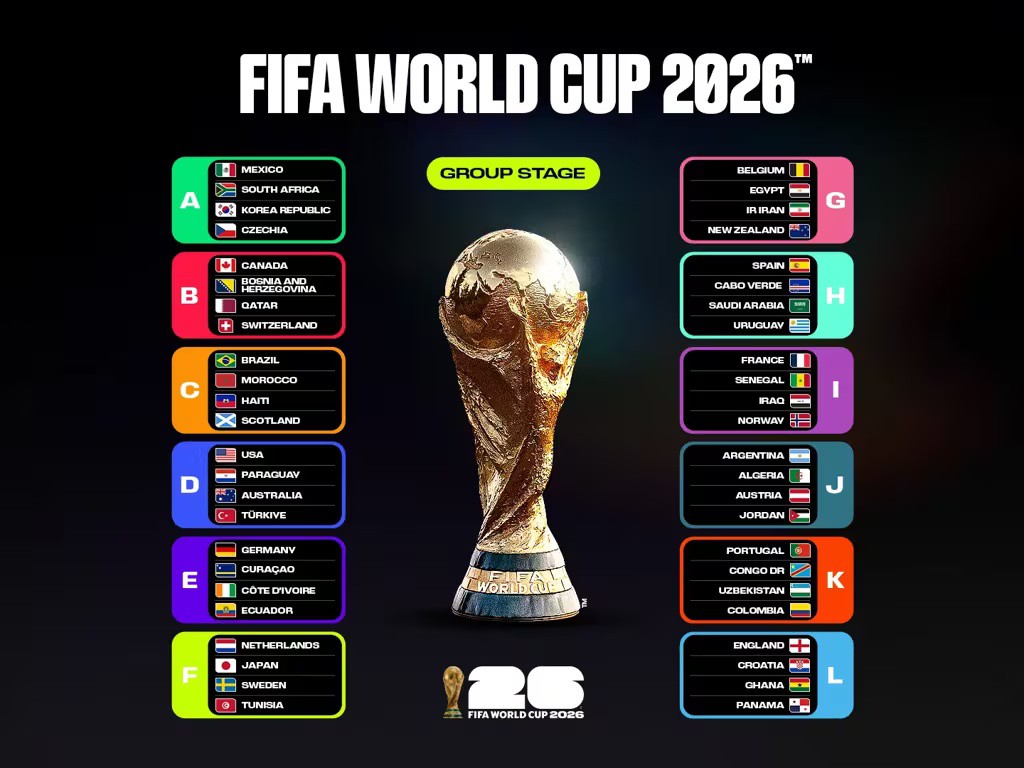
For the first time, the field expands from 32 to 48 nations. This expansion is designed to provide greater representation to emerging football regions. The structure will consist of 12 groups of four teams each. The top two teams from each group, along with the eight best third-place finishers, will advance to a newly introduced Round of 32.
This "knockout-heavy" format increases the total number of matches from 64 to 104. For the eventual champions, the road to glory will now require eight matches instead of the traditional seven. This adds a new layer of tactical depth and physical endurance, as squad rotation and depth become more critical than ever before.
The Final Countdown: New York/New Jersey
The pinnacle of the tournament will take place on July 19, 2026, at MetLife Stadium in East Rutherford, New Jersey. Situated in the shadow of the New York City skyline, this venue was chosen for its massive capacity and its status as a global crossroads. The final is expected to shatter global viewership records, serving as the ultimate climax to a summer that will redefine how the world views North American soccer.
Strategic Implications and Economic Impact
Beyond the pitch, the FIFA World Cup 26™ is a massive economic engine. Host cities are already investing billions in infrastructure, transportation, and hospitality. For the three host nations, the tournament is a chance to showcase political cooperation and logistical excellence on a grand scale. The "United" bid emphasizes the theme of unity, aiming to leave a lasting legacy of improved sporting facilities and increased youth participation across the continent.
Conclusion: A Legacy in the Making
As we count down the days to June 2026, the excitement continues to build. Whether it is the potential "last dance" of aging legends or the rise of a new generation of superstars from the CONCACAF region, the 2026 World Cup promises drama, spectacle, and history. It is more than a tournament; it is the moment football truly becomes the heartbeat of North America.
Author Profile: Guangzhou Smart Sports Industrial Co., Ltd.