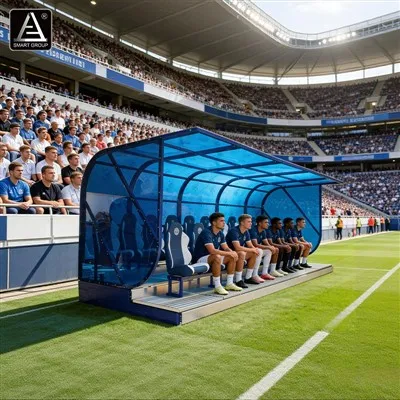
Introduction: A Historic Football Venue with Valuable Insights for Modern Stadium Development
Portman Road Stadium in Ipswich, England, is more than just the home of Ipswich Town Football Club. As one of England's longest-established football venues, it represents the evolution of stadium construction, spectator facility upgrades, and the transformation of traditional sports grounds into modern multi-functional venues.
For stadium developers, architects, sports facility contractors, government sports authorities, and professional venue operators, Portman Road provides valuable references in areas such as stadium renovation planning, seating system upgrades, spectator capacity optimization, hospitality development, and long-term facility management.
As a China-based supplier specializing in one-stop integrated sports facility solutions, SMART GROUP provides professional solutions for global sports projects, including stadium seating systems, retractable bleachers, grandstands, VIP seating, and customized spectator facilities. By analyzing successful stadium projects worldwide, we help partners create safer, more comfortable, and commercially valuable sports environments.

Portman Road Stadium Basic Information
· Stadium Name: Portman Road Stadium
· Location: Ipswich, Suffolk, England
· Home Club: Ipswich Town FC
· Capacity: 30,311 spectators
· VIP Hospitality Seats: 600
· Press Seats: 80
· Away Supporter Section: 1,900 seats
· Floodlighting Capacity: 1,438 lux
· Opening Year: 1884
· Major Renovations: 1937, 2002
· Record Attendance: 38,010 spectators
(Ipswich Town vs Leeds United, 8 March 1975)
· Address: Ipswich, IP1 2DA, United Kingdom

Construction History and Stadium Development Background
Portman Road Stadium was originally established in 1884, during the early development period of organized football in England. Unlike many modern stadiums that are constructed as complete projects within several years, Portman Road has grown through continuous adaptation and redevelopment over more than a century.
The stadium initially served as a local sporting venue before becoming the permanent home of Ipswich Town. With football becoming increasingly professional and attracting larger crowds, the stadium required continuous improvements to meet changing operational requirements.
Early Development Stage
During the early 20th century, Portman Road gradually expanded its spectator areas, including traditional terraces and covered viewing sections. These improvements reflected the rapid growth of football attendance and the increasing need for safer and more organized spectator management.
1937 Renovation
The first major renovation took place in 1937. The project focused on improving spectator capacity, strengthening stand structures, and enhancing the matchday experience.
This period marked the transition from basic football grounds toward more structured stadium environments, with improved crowd circulation and dedicated spectator areas.
2002 Modernization Project
The most significant transformation occurred in 2002, when Portman Road underwent extensive modernization.
The renovation focused on:
Upgrading spectator seating areas
Improving hospitality facilities
Enhancing safety standards
Creating better accessibility
Modernizing media and operational spaces
Improving overall fan experience
The redevelopment reflects an important trend in modern stadium projects: preserving historical identity while introducing advanced infrastructure and improved commercial functions.

Stadium Architecture and Design Development
Portman Road does not belong to the category of newly built stadiums designed by one architectural company. Instead, it represents a typical example of a historically evolved football stadium, where different sections were developed and upgraded through multiple construction phases.
Because the stadium was transformed gradually over more than 140 years, there is no single architect or construction company responsible for the entire venue.
The current stadium design combines traditional English football architecture with modern requirements, including:
Four independent spectator stands
Dedicated hospitality areas
Media facilities
Modern seating systems
Professional floodlighting
Improved safety and accessibility systems
For stadium designers and developers, Portman Road demonstrates how existing sports venues can be upgraded through phased renovation rather than complete demolition and reconstruction.

Stadium Layout and Stand Structure
Portman Road currently accommodates 30,311 spectators through four main stands.
Sir Bobby Robson Stand
Named after legendary manager Sir Bobby Robson, this stand provides a combination of general seating, hospitality areas, and premium spectator facilities.
The design highlights the importance of integrating different seating categories within one stadium, including standard seats, VIP areas, and corporate hospitality zones.
Cobbold Stand
The Cobbold Stand is one of the oldest sections of the stadium and maintains the traditional character of English football grounds.
Its renovation demonstrates how historical structures can be preserved while improving safety, comfort, and operational efficiency.
Sir Alf Ramsey Stand
Named after former Ipswich Town manager Sir Alf Ramsey, this stand provides large-scale spectator accommodation with excellent views of the pitch.
Modern stadium seating systems are designed to maximize seating density while maintaining comfortable legroom, clear sightlines, and safe evacuation routes.
Magnus Group West Stand
This stand contains important stadium functions, including:
Media areas
Player facilities
Hospitality spaces
Premium seating sections
It demonstrates how modern stadiums must combine spectator services with operational requirements.

Key Features and Design Value of Portman Road Stadium
1. Successful Stadium Renovation Model
Portman Road provides an excellent example of how traditional sports venues can be upgraded through phased development.
For governments and sports authorities planning stadium renovation projects, this approach can reduce construction risks while preserving local sporting heritage.
2. Efficient Spectator Capacity Planning
With a capacity of more than 30,000 seats, the stadium demonstrates effective space utilization.
Modern stadium planning requires careful consideration of:
Seating arrangement
Sightline optimization
VIP and hospitality distribution
Media requirements
Safety regulations
3. Professional Lighting and Broadcasting Support
The stadium's 1,438 lux floodlighting system supports professional football matches, television broadcasting, and evening events.
High-performance lighting infrastructure is now an essential component of international-standard sports facilities.
4. Commercial Hospitality Development
The stadium includes VIP seating and hospitality facilities, showing how modern venues can generate additional revenue beyond match tickets.
Premium seating, corporate boxes, and upgraded spectator experiences have become important considerations in stadium investment projects.
Famous Events Hosted at Portman Road
Throughout its history, Portman Road has hosted numerous important football events.
FA Cup History
One of the most memorable moments was the FA Cup Fifth Round match between Ipswich Town and Leeds United on 8 March 1975, which attracted a record attendance of 38,010 spectators.
UEFA Cup Matches
During Ipswich Town's successful European period, Portman Road hosted UEFA Cup matches, including the club's famous European campaign that resulted in winning the UEFA Cup in 1981.
International Football Events
The stadium has also hosted international football events and youth competitions, demonstrating its ability to meet professional event requirements.
Ipswich Town FC: The Club Behind Portman Road
Founded in 1878, Ipswich Town FC is one of England's historic football clubs.
The club achieved its greatest successes under two legendary managers:
Sir Alf Ramsey
Before becoming England's World Cup-winning manager in 1966, Sir Alf Ramsey guided Ipswich Town to the English First Division Championship in 1961–62.
Sir Bobby Robson
Under Sir Bobby Robson, Ipswich Town achieved:
FA Cup Winner in 1978
UEFA Cup Winner in 1981
These achievements established Ipswich Town as one of England's most respected football clubs.
SMART GROUP: Professional Stadium Facility Solutions for Global Sports Projects
The development history of Portman Road Stadium demonstrates that successful sports venues require continuous improvement in structure, seating, safety, and spectator experience.
For stadium owners, architects, contractors, and government sports projects, choosing reliable facility partners is essential.
SMART GROUP provides complete stadium solutions, including:
Stadium seating systems
VIP stadium seats
HDPE plastic stadium chairs
Retractable seating systems
Steel structure grandstands
Aluminum bleachers
Sports venue infrastructure solutions
With professional manufacturing capabilities and international project experience, SMART GROUP supports global partners in developing modern sports facilities that balance functionality, durability, safety, and commercial value.
Portman Road Stadium is a powerful example of how a historic venue can evolve through thoughtful design and engineering. Its transformation provides valuable inspiration for future stadium construction and renovation projects worldwide.
Author Profile: SMART GROUP - Global Sports Facility Solution Provider