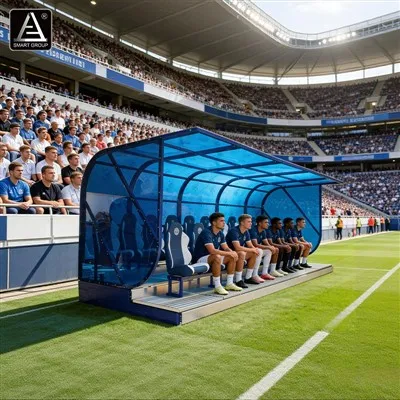
Riverside Stadium: A Modern Football Venue Showcasing Advanced Stadium Design and Construction Excellence
Stadium Overview
Located in Middlehaven Way, Middlesbrough TS3 6RS, United Kingdom, Riverside Stadium is one of the most iconic modern football stadiums in England. As the home stadium of Middlesbrough Football Club (Middlesbrough FC), it represents an important milestone in the evolution of football stadium design, combining modern spectator facilities, efficient structural engineering, and a fan-focused atmosphere.
The stadium has a seating capacity of 34,742 spectators, making it one of the largest football venues in the North East of England. Since its official opening on 26 August 1995, when Middlesbrough FC defeated Chelsea 2–0 in the first match, Riverside Stadium has become a landmark sports facility and an example of a successful modern stadium development project.
Before its current name, the stadium was known as the Cellnet Riverside Stadium from 1995 to 2002 due to sponsorship naming rights.

Construction Background and Development History
Riverside Stadium was built during a major transformation period in English football stadium development. Following the Taylor Report after the Hillsborough disaster in 1989, English football stadiums were required to move toward all-seater designs with improved spectator safety standards. Middlesbrough FC needed a new modern stadium to replace their historic home ground, Ayresome Park, which had served the club for more than 90 years.
Construction of Riverside Stadium began in 1994 and was completed in 1995, with a total construction period of approximately one year. The project cost around £16 million and was designed as a modern all-seater football stadium capable of providing improved safety, comfort, and commercial opportunities.
The stadium was later renovated in:
1998, with an investment of approximately £5 million
2016, with a further investment of approximately £5 million
These upgrades focused on improving facilities, maintaining structural performance, enhancing hospitality areas, and adapting the stadium to modern football requirements.

Design Company, Contractor and Engineering Team
The architectural design of Riverside Stadium was completed by The Miller Partnership, a UK-based architectural firm experienced in sports and public building projects.
The main construction contractor was Taylor Woodrow Construction, one of the UK's leading construction companies with extensive experience in large-scale infrastructure and stadium developments.
The structural engineering work was provided by Ove Arup, one of the world's most respected engineering consultancies. Arup has contributed to many internationally recognized sports venues and complex architectural projects, bringing advanced structural solutions and engineering expertise to Riverside Stadium.

Stadium Capacity and Structural Features
Riverside Stadium can accommodate 34,742 spectators with a fully seated configuration. Designed according to modern football stadium standards, the venue provides excellent visibility from all seating areas and creates an efficient circulation system for large crowds.
The stadium features a four-sided enclosed bowl design, which is a common structure used in modern football venues to maximize atmosphere, improve sightlines, and provide protection from weather conditions.
The main stand structure consists of:
Reinforced concrete foundations and supporting structures
Steel roof truss systems
Large cantilevered roof structures covering spectator seating areas
Modular seating arrangements designed for efficient crowd management
The steel roof structure provides unobstructed views for spectators by minimizing the need for internal columns. This design approach is widely used in modern stadium construction because it improves viewing quality while reducing structural limitations.
The stadium's architecture reflects the principles of modern sports venue design: safety, durability, operational efficiency, and long-term usability.

Famous Events Hosted at Riverside Stadium
Beyond hosting Middlesbrough FC home matches, Riverside Stadium has welcomed several important football events.
One of the most notable international matches was:
England National Team vs Slovakia
Date: 11 March 2003
Attendance: 35,000 spectators
The stadium has also hosted:
English Premier League matches
English Football League Championship matches
FA Cup and League Cup fixtures
International football events
Community and regional sports activities
Its international-standard facilities have allowed Riverside Stadium to serve not only as a football venue but also as a multi-purpose sports and entertainment facility.

About Middlesbrough Football Club
Founded in 1876, Middlesbrough FC is one of England's historic football clubs. Based in Middlesbrough, North Yorkshire, the club has a long tradition within English football and has competed in the Premier League and English Football League competitions.
The club achieved significant success by winning the League Cup in 2004, the first major trophy in its history. Middlesbrough FC has also developed a strong reputation for youth development and has produced many talented players through its academy system.
The relationship between the club and Riverside Stadium demonstrates how modern stadium infrastructure can support both professional competition and community engagement.

A Reference Project for Global Stadium Development
Riverside Stadium represents more than a football ground; it is a successful example of modern stadium planning, engineering cooperation, and sports infrastructure development.
For stadium construction companies, architectural design firms, government sports development programs, and international investors, Riverside Stadium provides valuable references in areas such as:
Large-capacity seating planning
Steel structure stadium solutions
Spectator safety design
Efficient construction management
Long-term facility operation
Modern sports facilities require comprehensive solutions covering design, manufacturing, installation, and maintenance. From stadium seating systems and grandstands to structural solutions and supporting facilities, professional suppliers play an important role in creating safe, durable, and high-performance venues.
As a professional one-stop sports facility solution provider from China, SMART GROUP is dedicated to delivering global stadium infrastructure solutions, including stadium seats, steel structure grandstands, aluminum bleachers, retractable seating systems, substitute benches, and customized sports facility projects.
Inspired by successful venues such as Riverside Stadium, SMART GROUP continues to support international clients in developing modern sports facilities that combine functionality, safety, and architectural value.
Author Profile: SMART GROUP - Global Sports Facility Solution Provider