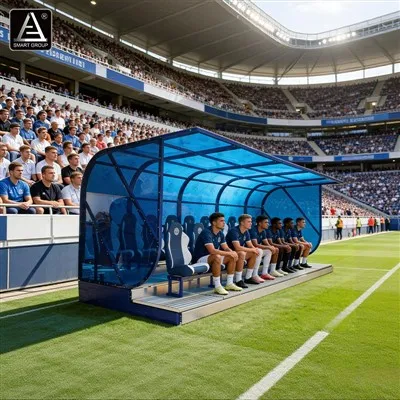
The Evolution of Modern Sports Venues
With the growing popularity of international sporting events, concerts, esports competitions, and large-scale entertainment activities, modern stadiums and indoor arenas are becoming increasingly multifunctional. Beyond providing spectator seating and competition spaces, today's sports venues are expected to deliver intelligent operations, immersive audience experiences, efficient facility management, and sustainable energy performance.
However, constructing a high-standard sports venue involves more than installing large LED screens, professional sound systems, and advanced lighting equipment. Many stadium operators still face challenges such as inefficient crowd management, high energy consumption, disconnected facility systems, and limited operational flexibility.
A truly smart stadium requires an integrated approach that connects venue scheduling, real-time crowd data, audiovisual equipment, building management systems, and intelligent control platforms.

Four Essential Systems for Smart Stadium Development
An integrated smart stadium solution can be built around four interconnected systems:
1. Intelligent Security and Crowd Management
Large sporting events and concerts can attract tens of thousands of visitors within a short period. Effective crowd management is therefore essential for maintaining venue safety and operational efficiency.
Intelligent ticketing systems, access control gates, facial recognition technologies, and AI-powered video analytics can help operators monitor visitor flows, identify crowd congestion, and understand seating occupancy across different stadium sections.
These technologies support more efficient entrance management, real-time crowd monitoring, and coordinated emergency response.
2. Professional Audiovisual and Entertainment Systems
Modern stadiums require high-performance audiovisual infrastructure to support sporting competitions, live broadcasts, concerts, and esports events.
Key facilities include:
● LED perimeter displays and central video screens
● Professional sound reinforcement systems
● Broadcast-standard sports lighting
● Intelligent stage and event lighting
● Audio and video control systems
● Integrated event management platforms
By connecting these systems through centralized control, operators can switch between different event configurations more efficiently and deliver a more immersive spectator experience.
3. Intelligent Energy and Building Management
Heating, ventilation, air conditioning, and lighting systems account for a significant proportion of stadium operating costs.
An intelligent building management system can monitor energy consumption across different functional areas, including competition halls, spectator stands, VIP lounges, changing rooms, and public corridors.
By adjusting lighting and air conditioning according to actual occupancy, event schedules, and environmental conditions, operators can reduce unnecessary energy consumption while maintaining suitable indoor environments.
4. AIoT-Based Integrated Management Platform
The AIoT platform acts as the central management foundation of a smart stadium.
It connects different building systems, sensors, security devices, audiovisual equipment, and venue management applications through standardized communication protocols.
By integrating event schedules, ticketing information, occupancy data, and equipment operating conditions, the platform enables coordinated control and more informed operational decisions.

Three Key Applications of Smart Stadium Integration
1. Demand-Based Air Conditioning and Energy Management
Traditional stadiums often operate air conditioning systems according to fixed schedules or manual decisions. This can result in unnecessary energy consumption when certain seating sections or functional areas have low occupancy.
An integrated management platform can connect ticketing information with building automation systems to estimate expected attendance in different stadium sections.
For example, areas with higher ticket sales can receive earlier cooling and increased ventilation, while unused sections can remain in energy-saving mode.
This demand-based approach helps optimize HVAC operation and reduce unnecessary energy consumption.

2. One-Touch Event Mode Switching
Modern indoor arenas are frequently used for basketball games, volleyball competitions, concerts, exhibitions, and esports events.
Each activity has different requirements for lighting intensity, sound configuration, LED display content, and stage arrangements.
An integrated control platform can establish predefined operating modes, such as:
● Basketball competition mode
● Concert and performance mode
● Esports event mode
● Exhibition mode
● Daily maintenance mode
With centralized control, venue operators can coordinate lighting, audiovisual equipment, and other connected systems according to the requirements of each event, reducing manual configuration and preparation time.

3. Intelligent Emergency Evacuation and Energy-Saving Operation
During large events, crowd congestion around entrances, exits, and circulation corridors can create operational and safety challenges.
AI-powered cameras and occupancy monitoring devices can provide real-time information about crowd density and movement.
When congestion is detected, the system can coordinate digital signage, public address systems, and emergency management procedures to support more effective crowd guidance.
After an event, occupancy sensors can help confirm whether designated areas have been cleared. Lighting and HVAC systems can then switch to appropriate standby or energy-saving settings.
This integration improves both venue safety management and post-event energy control.

Key Considerations for Smart Stadium Planning and Construction
Successful smart stadium development requires coordination between architectural design, structural engineering, electrical systems, mechanical engineering, and intelligent facility management.
Several factors should be considered during the planning and implementation stages:
● Network Infrastructure and System Security
High-density public Wi-Fi, event broadcasting networks, administrative networks, and equipment control networks should be properly designed and isolated according to their operational requirements. This helps maintain the reliability of critical stadium systems during high-traffic events.
● BIM Coordination and Structural Integration
Large LED screens, lighting equipment, sound systems, and suspended structures often require installation within overhead roof spaces and structural trusses. BIM-based coordination and structural verification help identify potential conflicts between equipment, cable routes, maintenance walkways, and supporting structures before construction.
● Open Communication Protocols
Interoperability is essential when integrating equipment from different manufacturers. Standard communication protocols such as KNX, DALI, BACnet, Modbus, DMX512, Dante, and TCP/IP can support communication between compatible subsystems, subject to interface and integration requirements.
● Energy Monitoring and Operational Management
An effective smart stadium platform should provide clear operational data, including electricity consumption, equipment status, area-based energy usage, and event-related operating costs. These insights help venue operators evaluate facility performance and identify opportunities for improvement.

SMART GROUP: Integrated Sports Facility Solutions for Modern Stadiums
As a sports facility supplier and integrated project solution provider, SMART GROUP recognizes that modern stadium development requires coordination between spectator infrastructure, architectural structures, sports facilities, and supporting systems.
A successful sports venue is not defined by a single product or technology. Its long-term value depends on how different facilities work together to support sporting events, entertainment activities, spectator comfort, and daily operations.
SMART GROUP provides a range of sports facility products and customized solutions, including:
● Steel grandstands and spectator seating structures
● Aluminum alloy bleachers for indoor and outdoor sports facilities
● Electric and manual retractable bleacher systems
● Fixed stadium seats and customized spectator seating
● Membrane structures and covered grandstands
● Sports facility structures and supporting equipment
Through project planning, customized design, manufacturing, and installation guidance, SMART GROUP supports stadiums, sports centers, indoor arenas, and multifunctional sports venues in different markets.
For new stadium construction and existing venue upgrades, the coordination of seating layouts, structural systems, spectator circulation, and supporting facilities should be considered from the early design stage. This integrated approach helps create sports environments that are functional, adaptable, and suitable for long-term operation.
Building the Future of Smart Sports Venues
The future of stadium development is moving beyond conventional facility construction toward integrated, intelligent, and energy-conscious venue management.
By combining intelligent crowd management, immersive audiovisual technologies, building automation, and AIoT-based integration, modern sports venues can improve spectator experiences while making better use of their facilities and operational resources.
For stadium owners, developers, contractors, and sports facility operators, intelligent planning at the early design stage is an important step toward building more flexible, efficient, and sustainable sports infrastructure.
SMART GROUP is committed to providing integrated sports facility solutions that support the development of modern stadiums and multifunctional sports venues worldwide.
Author:SMART GROUP - Global Sports Facility Manufacturer & Integrated Project Solution Provider