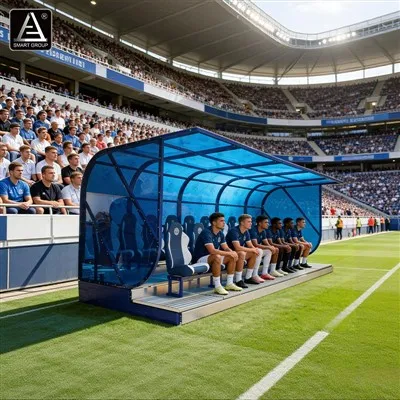
As a seasoned supplier of steel structure grandstands, I understand the critical balance between minimizing weight and maintaining strength. This is not just a technical challenge but also a financial and logistical one. A lighter grandstand can significantly reduce transportation costs, simplify installation, and even lower the overall foundation requirements. In this blog post, I will share some proven strategies to achieve this goal without compromising on the structural integrity of the grandstand.
1. Material Selection and Optimization
The choice of materials is the cornerstone of any weight - reduction strategy. High - strength low - alloy (HSLA) steels are an excellent option. These steels have a higher strength - to - weight ratio compared to traditional carbon steels. By using HSLA steels, we can reduce the amount of material needed to achieve the same level of strength. For example, if a conventional carbon steel requires a thicker section to support a certain load, an HSLA steel can do the job with a thinner and lighter section.
In addition to HSLA steels, we can also explore the use of composite materials. Composites, such as fiber - reinforced polymers (FRPs), can be used in combination with steel in non - critical areas. FRPs are lightweight, corrosion - resistant, and have good tensile strength. By incorporating FRP elements into the grandstand design, we can reduce the overall weight of the structure. For instance, the seating components can be made of FRP, which not only reduces weight but also offers a comfortable and durable seating experience.
2. Design Optimization
- Truss Design: Truss structures are widely used in steel grandstands because they can efficiently transfer loads while using less material. By optimizing the truss geometry, we can further reduce the weight. For example, a triangular truss is a very efficient shape as it distributes the load evenly among the members. Using advanced computer - aided design (CAD) and finite element analysis (FEA) software, we can analyze different truss configurations and select the one that offers the best balance between weight and strength.
- Topology Optimization: This is a more advanced design technique that uses algorithms to find the optimal distribution of material within a given design space. By applying topology optimization to the grandstand design, we can remove unnecessary material from areas where it is not needed, while still maintaining the required strength. This can lead to significant weight savings. For example, in the support columns of the grandstand, topology optimization can help us create a more efficient shape that reduces weight without sacrificing load - carrying capacity.
3. Joint Design
The joints in a steel structure grandstand are critical for transferring loads between different members. Traditional welding and bolting methods can add a significant amount of weight, especially when large - diameter bolts or thick welds are used. To reduce weight, we can explore alternative jointing methods.
- Adhesive Bonding: Adhesive bonding can be used in some non - critical or low - load areas of the grandstand. Adhesives can provide a strong bond between steel members while adding very little weight. They also have the advantage of distributing the load more evenly over the bonded area, which can reduce stress concentrations.
- Light - weight Fasteners: Using high - strength, light - weight fasteners such as titanium bolts can also contribute to weight reduction. Titanium has a high strength - to - weight ratio, which means that we can use smaller and lighter bolts to achieve the same level of connection strength as traditional steel bolts.
4. Modular Design and Prefabrication
Modular design and prefabrication are two strategies that can not only reduce the weight of the grandstand but also improve the efficiency of the construction process.
- Modular Design: By dividing the grandstand into smaller modular units, we can optimize the design of each module for weight reduction. Each module can be designed to be as lightweight as possible while still meeting the overall strength requirements of the grandstand. This approach also allows for easier transportation and installation, as the modular units can be easily assembled on - site.
- Prefabrication: Prefabricating the grandstand components in a factory environment allows for better quality control and more efficient use of materials. In the factory, we can use advanced manufacturing techniques to produce lightweight components with high precision. For example, we can use laser cutting and CNC machining to create complex shapes with minimal material waste.
Product Recommendations
As a steel structure grandstand supplier, we offer a range of products that incorporate these weight - reduction strategies.
- Outdoor Scaffolding Grandstand Seats Stadium Grandstand Seating for Events: Our Outdoor Scaffolding Grandstand Seats Stadium Grandstand Seating for Events are designed with lightweight materials and optimized truss structures. They are easy to transport and install, making them ideal for temporary events.
- Football Basketball Stadiums Temporary Grandstand Seating with Guardrail: Our Football Basketball Stadiums Temporary Grandstand Seating with Guardrail are built using high - strength low - alloy steels and feature innovative joint designs. The guardrails are also designed to be lightweight yet strong, ensuring the safety of the spectators.
- Movable Rental Temporary Grandstand Seating With VIP Room: The Movable Rental Temporary Grandstand Seating With VIP Room is a perfect example of our commitment to weight reduction. The modular design allows for easy relocation, and the use of composite materials in some areas further reduces the weight without sacrificing comfort or strength.
Conclusion
Reducing the weight of a steel structure grandstand without sacrificing strength is a complex but achievable goal. By carefully selecting materials, optimizing the design, improving joint design, and embracing modular design and prefabrication, we can create grandstands that are not only lighter but also more cost - effective and easier to install.


If you are interested in our steel structure grandstands and would like to discuss your specific requirements, please feel free to contact us for a procurement consultation. Our team of experts is ready to provide you with the best solutions tailored to your needs.
References
- ASCE 7 - 16, Minimum Design Loads and Associated Criteria for Buildings and Other Structures.
- AISC 360 - 16, Specification for Structural Steel Buildings.
- Bruns, T. A., & Tortorelli, D. A. (2001). Topology optimization of nonlinearly elastic structures and compliant mechanisms. Computer methods in applied mechanics and engineering, 190(26), 3443 - 3459.
- Gibson, L. J., & Ashby, M. F. (1997). Cellular solids: structure and properties. Cambridge university press.