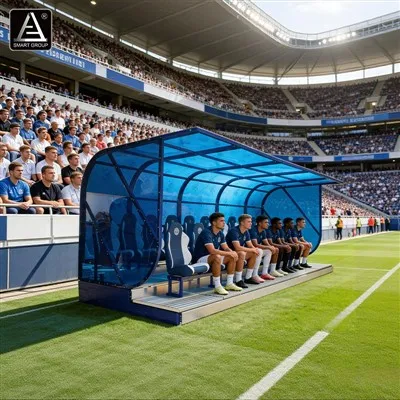
In the planning and construction of small sports stadiums-such as school fields, community sports grounds, and local municipal venues-one common question arises: is a covered grandstand really necessary? The answer depends on several practical factors, including climate conditions, budget allocation, usage frequency, and long-term operational goals.

Functional Importance of Covered Seating in Small Stadiums
From a practical usage perspective, covered grandstands significantly improve the usability of a stadium throughout the year. Even in small venues, spectator comfort directly affects attendance, participation, and overall event atmosphere.
A roof structure provides essential protection from rain, strong sunlight, and snow. In school stadiums and community sports facilities where events are frequently scheduled, uncovered seating often becomes unusable during bad weather. This leads to reduced audience numbers and lower efficiency of the venue.
In real-world stadium operations, functionality is the foundation of value. If spectators cannot comfortably use the seating area, the stadium's overall effectiveness is reduced, regardless of how well the field itself is designed.
Climate Conditions and Regional Suitability
Climate is one of the most decisive factors in determining whether a small stadium should include a covered grandstand. In regions with heavy rainfall, strong UV exposure, high humidity, or seasonal temperature extremes, roofed seating is often considered essential rather than optional.
For example, in monsoon-prone areas, frequent rain can interrupt events and discourage attendance. In hot and sunny climates, prolonged exposure to sunlight can create discomfort and even health risks for spectators.
To address these challenges, many modern small stadium projects now adopt lightweight roofing systems such as steel frame canopies, membrane structures, or polycarbonate sheet roofs. These solutions provide effective protection while maintaining relatively controlled construction costs.
Cost Considerations vs Long-Term Value
One of the main concerns for small stadium developers is the additional upfront investment required for a covered grandstand. It is true that adding a roof structure increases initial construction costs compared to open seating systems.
However, when evaluated over a longer operational period, the benefits often outweigh the initial expense. Covered seating reduces weather-related wear and tear on seats, railings, and structural components. This leads to lower maintenance costs and longer service life for stadium facilities.
More importantly, covered grandstands improve the usability rate of the stadium. Facilities that can operate in almost all weather conditions are more likely to be booked consistently for sports events, school activities, and community gatherings. Over time, this increases the overall value generated by the infrastructure.
Safety Standards and Structural Reliability
Modern sports facility construction places strong emphasis on safety and structural reliability. While not all small stadiums are legally required to install roofed seating, many engineering standards recommend it for enhanced spectator protection.
Covered grandstands are typically built using engineered steel structures designed to withstand wind loads, rain loads, and in some regions, snow loads or seismic activity. Common materials include Q235B or Q355B structural steel, combined with durable roofing systems.
Compared with open seating, roofed structures add an additional layer of protection not only for spectators but also for seating systems and supporting infrastructure. This improves the overall durability and stability of the facility.
Impact on User Experience and Venue Attractiveness
The quality of spectator experience plays a major role in how a stadium is perceived and used. Even small community or school stadiums benefit greatly from improved comfort conditions provided by covered seating.
When spectators are protected from weather conditions, they are more likely to stay for the full duration of events. This is particularly important for school sports, youth tournaments, and local competitions where audience participation is part of the event culture.
In addition, covered grandstands enhance the visual impression of a sports venue. A well-designed canopy structure gives the stadium a more professional appearance, which can help attract regional events, sponsorship interest, and community support.
Practical Guidelines: When Covered Grandstands Are Recommended
Based on typical engineering practice and real-world stadium usage patterns, covered grandstands are strongly recommended in the following situations:
· Regions with frequent rain, strong sunlight, or cold seasonal weather
· Schools and communities hosting regular sports programs and competitions
· Multi-purpose stadiums used for both sports and public events
· Long-term infrastructure projects aiming for stable year-round operation
· Facilities seeking higher attendance rates and improved user experience
For very small or temporary sports fields with minimal usage, an uncovered seating system may still be a reasonable choice.
Conclusion: A Strategic Decision for Long-Term Stadium Performance
For small stadium projects, the decision to install a covered grandstand should be viewed as a long-term infrastructure strategy rather than a simple optional feature. While it increases initial construction costs, it delivers significant advantages in usability, durability, safety, and spectator experience.
In most practical scenarios, especially for schools and community sports facilities, a covered grandstand transforms a small stadium into a more reliable and versatile venue capable of supporting year-round activities and higher levels of engagement.
Author Profile: Guangzhou Smart Sports Industrial Co., Ltd.