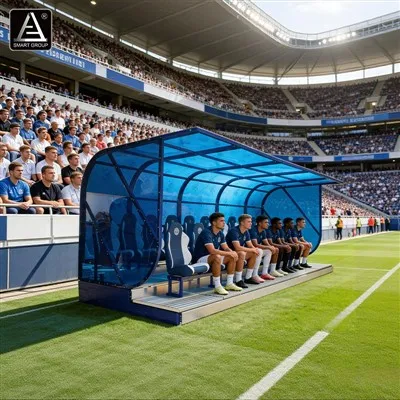
A grandstand roof is no longer just a shelter from sun and rain. Today, it plays a critical role in audience comfort, architectural appearance, structural safety, and long-term operating costs. Whether for football stadiums, school sports fields, athletic tracks, tennis courts, or temporary event venues, selecting the right roofing system directly affects the overall success of the project.
Among the most widely used grandstand roof structures are membrane structures, steel roofing systems, and polycarbonate (PC) sheet roofs. Each option offers different advantages depending on the project's budget, climate, design goals, and maintenance requirements.
Understanding these structural solutions helps project owners, architects, contractors, and procurement managers make informed decisions before investing.

Membrane Structure Roofs: Lightweight, Elegant, and Ideal for Large Span Stadiums
Membrane structures have become increasingly popular in modern sports architecture because of their distinctive appearance and excellent spanning capability.
Typically supported by steel frames and high-strength tension cables, membrane roofs use PVC, PVDF, or PTFE-coated fabric to create smooth curved surfaces capable of covering large seating areas with minimal supporting columns.
Key advantages include:
· Lightweight construction reduces structural load.
· Excellent architectural aesthetics.
· Suitable for long-span spectator areas.
· Natural daylight transmission reduces daytime lighting demand.
· UV resistance and weather protection.
· Wind-resistant when professionally engineered.
Membrane roofs are commonly found in football stadiums, athletics venues, exhibition centers, outdoor performance stages, and public gathering spaces.
However, professional structural calculation, membrane tension design, and installation experience are essential to ensure long-term safety and durability.
Steel Structure Roofs: The Most Durable and Versatile Solution for Permanent Grandstands
Steel roofs remain the most widely adopted roofing system for permanent grandstands around the world.
Constructed using hot-dip galvanized or painted structural steel, these roofs offer outstanding strength, excellent durability, and flexible architectural design.
Steel roofing systems can accommodate numerous roof coverings, including:
· Color-coated steel sheets
· Aluminum panels
· Sandwich insulation panels
· Standing seam metal roofing
Major advantages include:
· High structural strength
· Excellent resistance to heavy snow and wind loads
· Long service life exceeding 30 years with proper maintenance
· Easy integration with lighting, speakers, cameras, and solar panels
· Flexible dimensions for small schools or large stadiums
· Suitable for seismic regions when properly designed
Although steel roofs generally require higher initial investment than lightweight alternatives, they provide excellent long-term value because of lower maintenance costs and superior structural reliability.
For permanent municipal stadiums, universities, and professional sports facilities, steel structures remain the preferred engineering solution.
Polycarbonate (PC) Roofs: Cost-Effective, Bright, and Perfect for Medium-Sized Projects
Polycarbonate sheet roofing has become an increasingly popular option for schools, community sports centers, training grounds, and small stadiums.
PC sheets are transparent or semi-transparent engineering plastics that combine impact resistance with excellent weather performance.
Compared with traditional glass, polycarbonate is much lighter while offering significantly higher impact strength.
Its primary advantages include:
· High light transmission
· Effective UV protection with coated surfaces
· Lightweight installation
· Lower project cost
· Fast construction
· Attractive modern appearance
· Available in various colors and thicknesses
PC roofing is particularly suitable for:
· School grandstands
· Tennis courts
· Basketball courts
· Swimming pools
· Community sports parks
· Small football fields
One consideration is thermal expansion. Proper expansion gaps and high-quality aluminum fixing systems should always be incorporated during installation to prevent deformation over time.
How to Choose the Right Grandstand Roof Based on Your Project Requirements
There is no universal "best" roofing solution. Instead, the optimal choice depends on project-specific conditions.
For projects prioritizing iconic architecture and large unobstructed spans, membrane structures provide outstanding visual appeal.
If maximum structural strength, durability, and long-term performance are the primary objectives, steel roofing systems offer the most reliable investment.
When budgets are more limited while still requiring attractive appearance and natural lighting, polycarbonate roofs provide an excellent balance between cost and functionality.
Other important considerations include:
· Local wind and snow loads
· Seismic requirements
· Available construction budget
· Seating capacity
· Future maintenance costs
· Local building regulations
· Expected service life
· Architectural style
Working with experienced manufacturers ensures these factors are evaluated during the engineering stage.
Engineering Design and Structural Safety Should Always Come Before Material Selection
Regardless of the roofing material selected, engineering design is the foundation of every successful grandstand project.
Professional structural analysis should verify:
· Dead loads
· Live loads
· Wind resistance
· Snow loading
· Drainage systems
· Foundation reactions
· Steel member sizing
· Connection strength
International projects often follow standards such as Eurocode, AISC, ASCE, BS, or local building regulations depending on the country.
Factory fabrication quality, welding inspection, corrosion protection, and installation accuracy are equally important to ensure long-term structural safety.
Choosing a certified manufacturer with proven project experience significantly reduces construction risks.
The Future of Grandstand Roof Systems Is Becoming Smarter, More Sustainable, and More Customizable
As stadium construction continues to evolve, grandstand roofing systems are moving beyond basic weather protection.
Today's projects increasingly integrate:
· Solar photovoltaic panels
· LED sports lighting
· Rainwater collection systems
· Acoustic optimization
· Intelligent monitoring sensors
· Sustainable low-maintenance materials
Modern steel structures also allow easier future expansion, making them suitable for facilities expecting increased spectator capacity over time.
Customized engineering solutions are becoming the industry standard, enabling project owners to balance aesthetics, functionality, sustainability, and investment efficiency.
Conclusion
Membrane structures, steel roofs, and polycarbonate roofing each serve different roles in modern grandstand construction. Membrane roofs excel in architectural elegance and long-span coverage, steel roofs deliver unmatched durability and engineering reliability, while polycarbonate roofs provide an economical and practical solution for schools and community sports facilities.
Before selecting a roofing system, project owners should carefully evaluate structural requirements, environmental conditions, budget, maintenance expectations, and long-term operational goals. Collaborating with an experienced grandstand manufacturer that offers structural design, fabrication, installation, and after-sales support ensures a safer investment and a roofing solution tailored to the unique needs of every sports venue.
Author Profile: SMART GROUP - Global Sports Facility Solution Provider