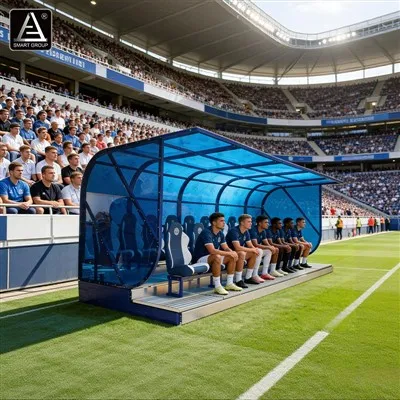
The Growing Shift Toward Steel Grandstands in Modern Stadium Construction
Outdoor sports venues are evolving rapidly as project owners seek faster construction, lower lifecycle costs, and greater design flexibility. Whether for football stadiums, athletics tracks, baseball fields, school sports grounds, or temporary event venues, steel structure grandstands are replacing traditional reinforced concrete grandstands in many new projects.
This trend is not simply about reducing construction costs. It reflects changing priorities among architects, contractors, facility managers, and investors who value sustainability, efficient installation, easier maintenance, and future expansion.
In this article, we explain why steel grandstands have become the preferred solution for modern outdoor spectator seating and compare them with conventional concrete structures from an engineering and operational perspective.
Faster Construction Significantly Reduces Project Timelines
One of the biggest advantages of steel grandstands is construction speed.
Unlike concrete structures that require extensive foundation work, formwork installation, reinforcement placement, concrete pouring, and long curing periods, steel grandstands are manufactured in factories before being transported to the project site for assembly.
Most structural components arrive prefabricated, allowing installation teams to complete the grandstand much faster with bolted connections.
Typical benefits include:
· Shorter construction schedules
· Less dependence on weather conditions
· Reduced labor requirements
· Earlier project completion and venue operation
For schools, municipalities, sports clubs, and event organizers working under tight deadlines, this faster installation offers considerable economic value.

Lower Overall Construction Costs Improve Investment Efficiency
Although material prices fluctuate, steel grandstands often provide better overall project economics than concrete alternatives.
Because the structure is lighter, foundation requirements are usually smaller, reducing excavation, concrete consumption, and foundation reinforcement.
In addition, prefabricated production minimizes on-site labor, equipment rental, and construction management costs.
The total project cost can often be optimized through:
· Lower foundation expenses
· Faster installation
· Reduced labor costs
· Less material waste
· Easier logistics management
When lifecycle costs are considered, steel structures frequently deliver a higher return on investment for sports facility owners.
Flexible Design Meets Different Venue Requirements
Modern sports facilities rarely follow identical layouts.
Every stadium has different seating capacities, site conditions, viewing angles, accessibility requirements, and architectural styles.
Steel structures provide outstanding design flexibility because beams, columns, and trusses can be customized to fit nearly any configuration.
Manufacturers can easily design:
· Straight grandstands
· Curved spectator stands
· Corner seating sections
· Multi-tier grandstands
· Grandstands with roofs
· VIP seating platforms
· Accessible wheelchair areas
· Media platforms
Compared with cast-in-place concrete, steel allows architects to create more customized spectator facilities while maintaining structural efficiency.
Steel Structures Support Future Expansion and Renovation
Sports venues often need to increase seating capacity as attendance grows.
Expanding a concrete grandstand usually requires major demolition, additional foundations, and complex structural integration.
Steel grandstands are much easier to modify.
Additional seating sections, roof systems, staircases, platforms, or accessibility features can often be added without rebuilding the original structure.
This modular approach provides long-term flexibility and helps owners adapt their facilities to future events or changing spectator demands.
High Structural Strength with Reduced Self-Weight
Steel offers an excellent strength-to-weight ratio.
Compared with reinforced concrete, steel structures achieve high load-bearing capacity while significantly reducing structural weight.
This lighter weight creates several engineering advantages:
· Lower foundation loads
· Better performance on weaker soil conditions
· Easier transportation
· Simplified installation
· Reduced seismic forces in earthquake-prone regions
When properly engineered according to international structural standards, steel grandstands safely withstand live loads, wind loads, and environmental conditions for decades.
Easier Maintenance Throughout the Entire Service Life
Modern steel grandstands are typically manufactured using hot-dip galvanized steel or high-quality powder-coated steel.
These protective treatments provide excellent resistance to corrosion, moisture, and UV exposure.
Routine maintenance generally involves periodic inspections and minor surface repairs rather than extensive structural rehabilitation.
By comparison, concrete grandstands may develop:
· Surface cracking
· Water penetration
· Reinforcement corrosion
· Concrete spalling
· Difficult structural repairs
Lower maintenance requirements help reduce long-term operating costs for schools, municipalities, and stadium operators.
Better Sustainability Supports Green Building Goals
Environmental performance has become an important consideration in public infrastructure projects.
Steel is one of the world's most recyclable construction materials.
At the end of a grandstand's service life, structural steel can be recovered, recycled, and reused in new construction projects.
Additional sustainability benefits include:
· Reduced construction waste
· Less on-site pollution
· Factory-controlled production
· Lower material waste
· Improved resource efficiency
Many governments and developers now prioritize recyclable building materials to meet green building certification requirements.
Ideal Applications for Modern Steel Grandstands
Steel grandstands have become the preferred seating solution across many sports and entertainment facilities.
Common applications include:
· Football stadiums
· Athletics stadiums
· Baseball fields
· Rugby venues
· Cricket grounds
· Tennis centers
· School sports facilities
· University stadiums
· Outdoor concert venues
· Temporary sporting events
Manufacturers can also integrate roofing systems, HDPE spectator seats, aluminum benches, safety guardrails, lighting structures, press platforms, and accessible seating into one complete solution.
Conclusion: Steel Grandstands Offer Greater Value for Today's Sports Facilities
As construction technology continues to advance, steel structure grandstands have become the preferred alternative to traditional concrete grandstands for many outdoor sports venues.
Their combination of faster installation, lower lifecycle costs, flexible design, structural reliability, sustainability, and easier future expansion makes them an ideal investment for modern stadium construction.
For project owners seeking a durable, customizable, and cost-effective spectator seating solution, professionally engineered steel grandstands provide long-term value while meeting international safety and quality standards. As demand for efficient sports infrastructure continues to grow worldwide, steel structures are expected to remain the leading choice for outdoor grandstand projects.
Author Profile: SMART GROUP - Global Sports Facility Solution Provider