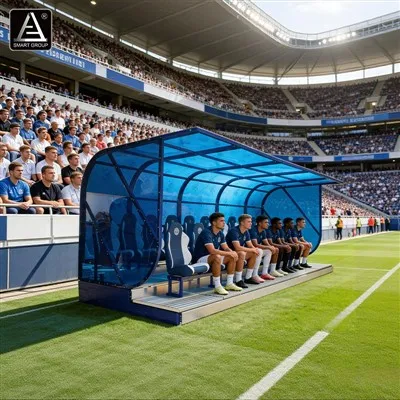
Selecting the right sports seating supplier is not just a purchasing decision-it directly impacts stadium safety, spectator experience, long-term maintenance costs, and project compliance. Whether for a football stadium, school arena, or multi-purpose sports venue, buyers need a structured approach to evaluate different suppliers fairly and effectively.
Below is a practical framework used by professional procurement teams and facility planners when comparing sports seating solutions.
Clarifying Project Requirements Before Comparing Suppliers
Before reviewing suppliers, it is essential to define the exact needs of the project. Many procurement failures happen because the requirements are unclear from the beginning.
Key factors include seating type (fixed, telescopic, folding, or bleacher systems), venue capacity, indoor or outdoor usage, and safety standards required by local regulations. Climate conditions also matter, especially for outdoor stadiums where UV resistance, drainage design, and corrosion protection are critical.
A well-defined requirement list allows buyers to compare suppliers on equal terms rather than being influenced by incomplete or inconsistent proposals.
Evaluating Material Quality and Structural Durability
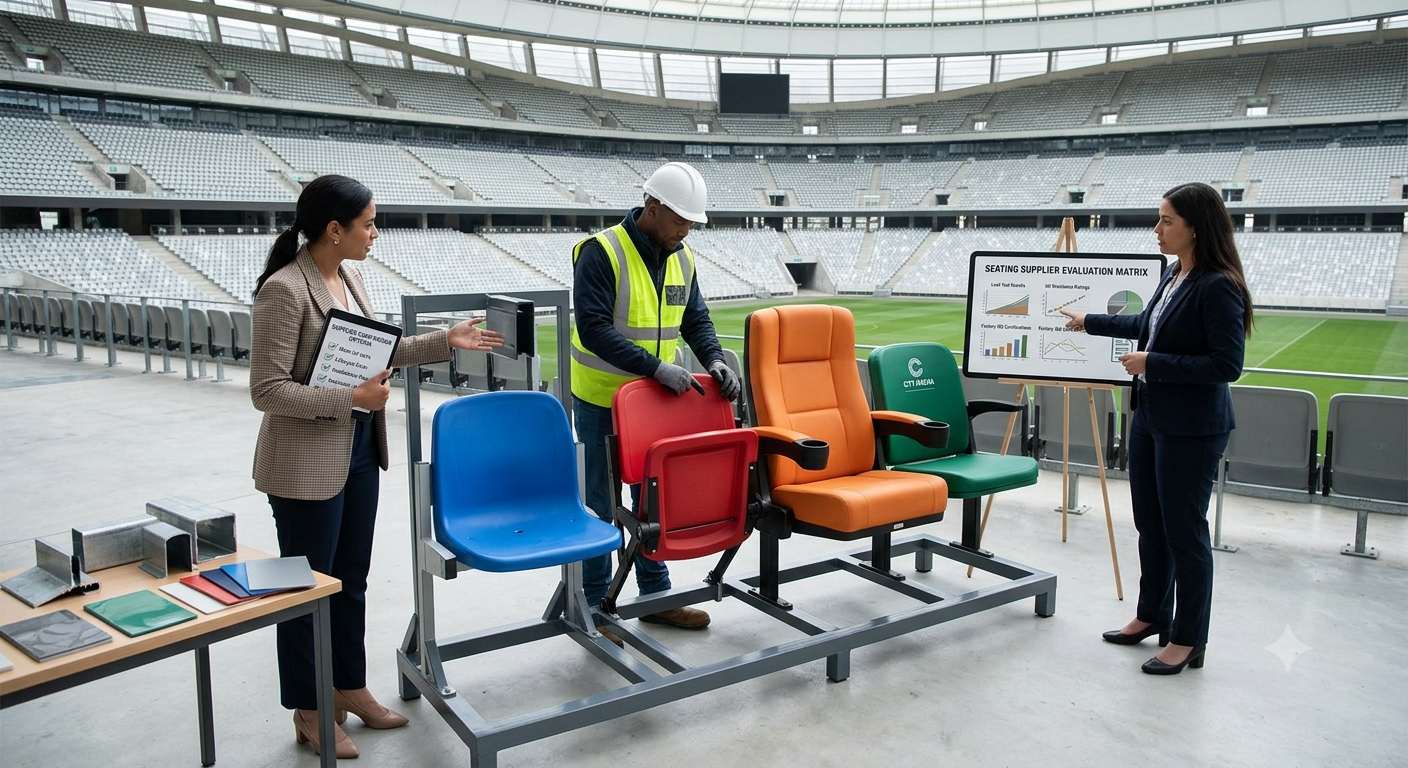
Material selection is one of the most important indicators of long-term performance. High-quality sports seating systems typically use UV-resistant polypropylene, powder-coated steel frames, or aluminum alloys depending on application needs.
When comparing suppliers, it is important to check whether they provide material test reports, load-bearing certifications, and anti-corrosion treatment details. For example, galvanized steel with powder coating generally performs better in outdoor environments than untreated steel.
Experienced buyers also examine seat ergonomics, fire resistance ratings, and expected lifecycle. A lower initial price may hide higher replacement or maintenance costs later.
Assessing Manufacturing Capability and Compliance Standards
A reliable supplier should demonstrate strong manufacturing capacity and compliance with international standards such as ISO certifications, EN standards, or local stadium safety codes.
Factory scale, production equipment, and quality control processes are strong indicators of consistency. Suppliers with automated molding lines and precision steel fabrication systems are more likely to deliver uniform products at scale.
It is also important to verify past project references. Suppliers who have completed stadium-scale installations or government projects usually have stronger execution capability and risk control systems.
Design Flexibility and Customization Capabilities
Modern stadium projects often require customized seating layouts, branding colors, and modular configurations. Therefore, design flexibility becomes a key comparison factor.
A strong supplier should offer CAD layout support, 3D visualization, and engineering adjustment based on venue structure. Custom options such as seat numbering, VIP upgrades, folding mechanisms, or integrated cup holders can significantly improve user experience.
Suppliers with in-house design teams typically respond faster and provide more accurate technical solutions compared to those relying on third-party outsourcing.
Installation Support, Logistics, and After-Sales Service
Even high-quality seating systems can fail if installation and support are poorly managed. Buyers should evaluate whether the supplier provides installation manuals, on-site supervision, or full turnkey installation services.
Logistics capability is equally important, especially for international projects. Efficient packaging design, container optimization, and shipping coordination reduce delays and damage risks.
After-sales service should include spare parts availability, warranty terms, and response time for technical support. A supplier's long-term commitment often reflects the reliability of their products.
Cost Analysis: Balancing Price with Lifecycle Value
Price is always a key consideration, but it should not be evaluated in isolation. A more accurate approach is to analyze lifecycle cost, including installation, maintenance, repair, and replacement frequency.
A slightly higher upfront investment in durable materials and better engineering can significantly reduce long-term operational costs. Buyers should also consider hidden costs such as downtime during repairs or early refurbishment.
The most competitive supplier is not necessarily the cheapest, but the one that delivers the best total value over the product's lifecycle.
Conclusion
Comparing sports seating suppliers requires a structured evaluation across multiple dimensions, including materials, manufacturing capability, design flexibility, installation support, and lifecycle cost. By applying a systematic approach, buyers can reduce procurement risks and ensure long-term performance, safety, and audience satisfaction in their sports venue projects.
Author Profile: Guangzhou Smart Sports Industrial Co., Ltd.