Global Giants of Stadium Design: Top 10 Architecture Firms Shaping the Future of Sports Architecture
Leading international design firms are shaping the future of sports venues through innovative architecture, spectator-focused planning, and integrated stadium solutions. For stadium developers, construction companies, and sports facility suppliers, understanding these firms can help identify potential project partners and emerging opportunities.
Global Sports Venue Design: Ten Leading Architecture Firms to Know
Sports stadiums are becoming increasingly sophisticated, combining architectural innovation, structural engineering, spectator comfort, commercial spaces, and advanced technology. From professional football stadiums and indoor arenas to Olympic venues and multipurpose sports complexes, specialized architecture firms play a critical role in bringing these projects to life.
Although there is no single universally recognized ranking of sports stadium architecture firms, several international practices have established strong reputations through their work on major sports and entertainment facilities.
The following list highlights ten influential firms, their areas of expertise, selected project experience, and official websites.
1. Populous - Global Sports and Entertainment Architecture
Official website: https://populous.com
Populous is widely recognized for its specialization in sports, entertainment, and major event venues. Its portfolio includes stadiums, arenas, convention facilities, and large-scale event environments.
The firm has contributed to prominent projects such as Tottenham Hotspur Stadium in London and Adelaide Oval in Australia. It also worked with other design teams on Wembley Stadium.
Populous places significant emphasis on spectator experience, sightlines, circulation, hospitality spaces, and the relationship between stadium architecture and the events hosted inside.
For stadium developers and sports facility suppliers, its projects provide useful references for understanding modern stadium planning, seating configurations, accessibility, and integrated venue design.
2. HKS - Large-Scale Stadiums and Sports Facilities
Official website: https://www.hksinc.com
HKS is an international architecture and design firm with extensive experience in professional sports venues and large entertainment facilities.
Its sports portfolio includes major projects such as SoFi Stadium, AT&T Stadium, U.S. Bank Stadium, and Globe Life Field in the United States.
The firm's work demonstrates how stadium design can integrate structural systems, roof engineering, spectator facilities, hospitality areas, and commercial functions within a unified architectural concept.
HKS is particularly relevant to companies interested in large football and American football stadiums, indoor arenas, and high-capacity sports facilities.
3. HOK - Architecture, Engineering Coordination, and Sports Venue Design
Official website: https://www.hok.com
HOK is a global architecture and design practice involved in sports venues, entertainment facilities, public buildings, and complex commercial developments.
Its capabilities cover architectural planning, interior design, multidisciplinary coordination, and the development of spaces intended to support large audiences and major events.
The company's sports-related portfolio and the legacy work of teams that have joined HOK offer useful references for arena planning, spectator circulation, hospitality facilities, and venue modernization.
For project developers, the firm's integrated design approach highlights the importance of coordinating architecture with structural engineering, seating systems, accessibility, and operational requirements.
4. MANICA Architecture - Specialist Sports Venue Design
Official website: https://www.manicaarchitecture.com
MANICA Architecture focuses on sports and entertainment venues, including professional stadiums and indoor arenas.
Unlike firms whose portfolios span many building types, MANICA has a strong emphasis on sports architecture. Its work explores venue planning, spectator experiences, building form, premium hospitality spaces, and the relationship between facilities and their surrounding urban environments.
This specialization makes the company worth researching for developers planning new professional sports venues, competition arenas, and sports entertainment complexes.
Companies seeking to supply stadium seating, grandstands, team shelters, and related spectator facilities should first identify MANICA's role in each project and determine whether technical specifications or supplier recommendations fall within its scope.
5. Foster + Partners - Landmark Stadiums and Major Architectural Projects
Official website: https://www.fosterandpartners.com
Foster + Partners is an internationally recognized architecture and urban design practice known for complex buildings, major public facilities, and large-scale urban projects.
Its sports-related experience includes Lusail Stadium in Qatar, developed through collaboration with other specialist teams. The practice also collaborated with Populous on Wembley Stadium.
The firm's work illustrates how stadium architecture can combine distinctive building forms, advanced structural solutions, environmental considerations, and large spectator capacities.
For contractors and suppliers, projects of this scale typically require careful coordination among the architect, structural engineers, specialist consultants, construction contractors, and equipment manufacturers.
6. Herzog & de Meuron - Iconic Sports Architecture
Official website: https://www.herzogdemeuron.com
Based in Switzerland, Herzog & de Meuron is internationally known for architectural projects that combine strong visual identities with detailed material and structural design.
Its notable sports projects include Beijing National Stadium, widely known as the Bird's Nest, and Allianz Arena in Munich. The practice also designed St. Jakob-Park in Basel.
These projects demonstrate how stadiums can become architectural landmarks while accommodating the operational demands of sporting events and large audiences.
For companies working in spectator seating and stadium infrastructure, these venues provide valuable references for understanding the coordination required between architectural concepts, structural systems, spectator areas, and construction methods.
7. Gensler - Sports, Entertainment, and Integrated Venue Environments
Official website: https://www.gensler.com
Gensler is a global architecture and design firm with a broad portfolio spanning commercial, cultural, hospitality, and entertainment environments.
Its relevance to sports development extends beyond the primary competition space to areas such as spectator services, hospitality, public circulation, commercial areas, and the wider experience of visiting a venue.
Sports and entertainment developments increasingly function as multipurpose destinations rather than facilities used exclusively on match days. Architecture and interior design therefore need to accommodate different audiences, events, and operational requirements.
For sports facility suppliers, this creates opportunities to study how spectator facilities and supporting infrastructure fit into the overall venue concept.
8. AECOM - Sports Infrastructure and Major Development Planning
Official website: https://aecom.com
AECOM is an international infrastructure consulting, engineering, and design company involved in complex development projects across multiple sectors.
Its capabilities span planning, engineering, infrastructure, transportation, and large-scale development. These services are relevant to sports stadiums and sports parks that require coordination between the venue itself and surrounding infrastructure.
Major sports developments often involve more than a single stadium. They may include training facilities, access roads, public spaces, utilities, parking, and other supporting facilities.
AECOM is therefore worth researching for sports infrastructure programs, government-funded developments, and large sports precincts. Suppliers should verify the company's specific role in each project, as infrastructure consulting and stadium architectural design may be delivered by different teams.
9. HNTB - Stadium Engineering and Venue Modernization
Official website: https://www.hntb.com
HNTB is an architecture, engineering, and infrastructure consulting firm with significant experience in transportation and sports facility projects.
Its sports-related work includes stadium and arena development, facility planning, engineering coordination, and modernization projects. Existing venues frequently require renovation, expanded capacity, upgraded spectator areas, and improved access and circulation.
These projects can create opportunities for specialized suppliers involved in replacement seating, grandstand upgrades, structural modifications, and related sports facility components.
Companies pursuing the North American market should investigate HNTB's current sports portfolio and identify the project teams responsible for relevant venue developments.
10. KSS - Sports, Leisure, and Football Stadium Architecture
Official website: https://kssgroup.com
KSS is a UK-based architecture and design practice with experience in sports, leisure, and related facilities.
Its areas of interest include sports venues, football-related facilities, training environments, and the development or improvement of existing facilities.
Sports projects in the UK and wider European market may involve new stadium construction, spectator facility upgrades, training grounds, and improvements to club infrastructure.
For suppliers of grandstands, stadium seats, team shelters, and other sports venue equipment, specialist sports architecture practices such as KSS can be useful starting points for identifying relevant projects and understanding design requirements.
Why These Architecture Firms Matter to Stadium Construction Projects
Sports stadium development involves a wide network of stakeholders. Architects establish the overall design concept and coordinate the spatial requirements of the venue, while structural engineers, specialist consultants, contractors, and suppliers contribute to the technical and construction process.
The procurement route varies by project. Some equipment is specified during the design stage, while other products are selected by the main contractor, a specialist subcontractor, the venue owner, or a sports facility integrator.
For this reason, suppliers should not limit their business development activities to architectural firms alone. A complete project-development strategy should also consider construction companies, stadium consultants, engineering firms, developers, government procurement departments, and specialist seating contractors.
Sports Facility Products Relevant to Stadium Projects
Different projects require different combinations of spectator and sports infrastructure.
Steel structure grandstands: For permanent or temporary spectator facilities at stadiums, race tracks, and outdoor sports venues.
Aluminum alloy grandstands: For modular spectator seating systems and selected indoor or outdoor applications.
Stadium seats: For football stadiums, basketball arenas, athletics venues, and other spectator facilities.
Retractable bleachers: For school gymnasiums, multipurpose arenas, and indoor facilities that need flexible floor space.
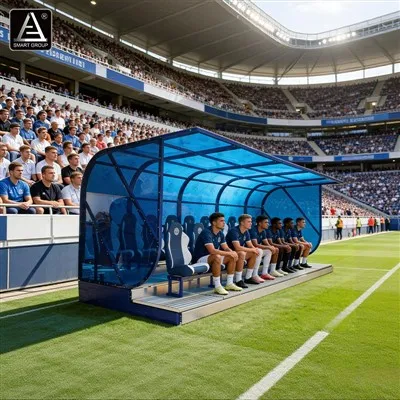
Team shelters and dugouts: For football clubs, training grounds, and other team sports facilities.
Product selection should be based on project-specific requirements, including capacity, loading criteria, accessibility, weather exposure, maintenance expectations, applicable regulations, and installation conditions.
SMART GROUP: Integrated Sports Facility Solutions for Global Projects
As international stadium projects become more integrated, coordination between design teams, contractors, and equipment suppliers is increasingly important.
SMART GROUP is a China-based supplier focused on providing one-stop integrated sports facility solutions for global customers. Its product scope includes grandstands, stadium seating, retractable bleachers, team shelters, and related sports facility products.
For stadium developers, contractors, and project consultants, early communication with qualified suppliers can help clarify product specifications, customization options, installation requirements, and coordination needs before procurement begins.
When evaluating potential suppliers, project teams should review relevant technical documentation, material specifications, load requirements, certifications, manufacturing capabilities, installation support, and experience with comparable projects.
Conclusion
The ten firms featured in this article represent a range of expertise in sports architecture, stadium planning, engineering coordination, and sports infrastructure development. Populous, HKS, HOK, and MANICA Architecture are particularly relevant to researching specialist sports venue design, while Foster + Partners and Herzog & de Meuron offer important references for landmark stadium architecture. Gensler, AECOM, HNTB, and KSS provide additional perspectives across integrated design, infrastructure, venue improvement, and sports facilities.
This list is an industry reference rather than an official ranking. Project teams, design responsibilities, and company portfolios can change, so each firm's current involvement should be confirmed through its official website and project documentation.
For sports facility suppliers, the most productive approach is to identify firms and project teams working on suitable stadium developments, understand the procurement structure, and provide clear technical information that supports the design and construction process.
Author Profile: SMART GROUP - Global Sports Facility Solution Provider