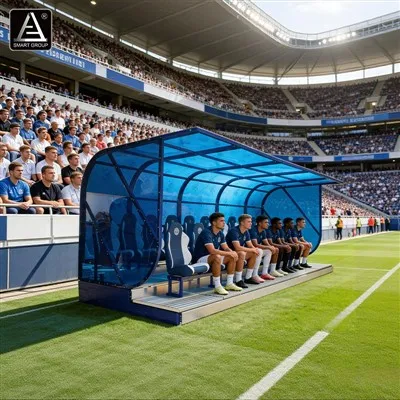
The global sports and entertainment landscape is undergoing a radical transformation. As cities compete to host prestigious events like the NBA Global Games, Olympic qualifiers, and Tier-1 world concert tours, the demand for comprehensive arena one-stop solutions has never been higher. Building a stadium is no longer just about concrete and steel; it is about creating a high-tech, multi-functional ecosystem that guarantees athlete performance, fan immersion, and 365-day operational profitability.
The Foundation: Engineering the Multi-Purpose Field of Play (FOP)
The most critical challenge for any modern arena is versatility. A world-class venue must be a "chameleon," capable of hosting a professional basketball game on Monday and a massive rock concert on Tuesday.
NBA-Grade Maple Wood Flooring
At the heart of the sports experience is the NBA-grade multi-functional flooring system. These are not standard gym floors; they are engineered systems utilizing Northern Hard Maple, known for its incredible density and fiber strength. A one-stop solution ensures the flooring meets FIBA Level 1 standards, incorporating specialized subfloor "sleeper" systems and resilient pads. This technology provides uniform energy return and vibration damping, which is essential for protecting the joints of elite athletes during high-impact play.
Intelligent Telescopic Seating Systems
To facilitate the transition between different event types, motorized telescopic seating is indispensable. These retractable platforms allow the arena to expand its floor space for trade shows or "standing-room" concert pits. When extended, they provide the steep, intimate "cauldron" effect that fans love. Modern systems are now integrated with smart sensors to ensure perfectly aligned deployment, reducing "changeover" time from days to just a few hours.

Visual Excellence: The Digital Nervous System
In the age of high-definition social media, an arena must be a visual spectacle. The digital integration within a one-stop solution focuses on three key layers:
The Central Hanging "Jumbotron"
The Center-hung Jumbotron serves as the arena's digital heart. Top-tier solutions now feature 4mm or 2.5mm pixel pitch LED displays, allowing for 8K resolution. These units often include "under-belly" screens for fans in the front rows and integrated "hoop lights" that sync with the game clock.
360-Degree Ribbon Boards and Fascia Displays
Surrounding the seating bowl, the LED ribbon board (or power ring) acts as the primary tool for fan engagement and sponsorship revenue. These displays are used for "Moment of Exclusivity" (MOE) triggers, where every screen in the arena syncs to celebrate a goal or a slam dunk, creating an unforgettable sensory peak for the audience.
Wayfinding and Digital Signage
A professional venue wayfinding system is often overlooked but critical for crowd control. By integrating dynamic LED signage, the arena can change directions and instructions in real-time, guiding 20,000 fans safely to their seats, VIP lounges, or the nearest exit during an emergency.

Technical Infrastructure: Lighting, Audio, and Rigging
The "unseen" elements of an arena often determine whether a world tour will book the venue.
Broadcast-Quality LED Lighting
Modern arena lighting systems must meet the strict requirements of 4K and 8K HDR broadcasting. This means flicker-free LED fixtures with a high Color Rendering Index (CRI). Furthermore, these lights allow for "theatrical" sports presentations-instant on/off capabilities allow the venue to go dark for player introductions, a feat impossible with old metal-halide lamps.
Professional Acoustic Design
The acoustic environment of a large stadium is notoriously difficult. A comprehensive solution includes advanced acoustic modeling and the installation of line-array speaker systems that provide uniform sound pressure levels (SPL) across every seat. This ensures that the referee's whistle is as clear as a lead singer's vocals.
High-Load Rigging and Stage Machinery
World-class concerts bring massive production rigs. Modern arenas are designed with a "mother-grid" rigging system capable of supporting 60 to 100 tons of suspended equipment. Automated stage machinery and digital hoists allow for rapid installation of complex lighting and scenic elements, making the venue a favorite for tour promoters.

Maximizing Commercial ROI: VIP and Back-of-House
The profitability of an arena is often found in the "back-of-house" and premium spaces.
VIP Boxes and Luxury Suites
A one-stop solution prioritizes the design of VIP hospitality suites. These are high-yield assets equipped with luxury seating, private climate control, and integrated digital ordering systems. They provide a "stadium-within-a-stadium" experience for corporate partners and high-net-worth individuals.
Professional Functional Rooms
The layout of functional rooms is a science.
Locker Rooms: Designed to the standards of professional leagues, featuring hydrotherapy pools, cryotherapy zones, and customized player stalls.
Dressing Rooms: Known as "Green Rooms" in the entertainment industry, these require high-end finishes, professional-grade vanity lighting, and acoustic privacy to accommodate global superstars.
Merchandise & Concessions: Strategically placed flagship merchandise stores at the main concourse nodes use data-driven foot-traffic modeling to maximize retail sales during event intermissions.
Conclusion: The Competitive Edge of One-Stop Integration
The complexity of modern venue management makes a one-stop arena solution the only viable path for developers. By consolidating the timing and scoring systems, sports lighting, and multi-functional flooring under a single integrated design, operators eliminate "system silos" and compatibility issues.
The result is a future-proof landmark that functions as a community hub and a commercial powerhouse. As the industry moves toward 2030, the integration of AI-driven crowd analytics and 5G-enabled fan experiences will only further cement the importance of having a robust, integrated professional infrastructure from day one.
Author Profile: Guangzhou Smart Sports Industrial Co., Ltd.