In modern stadium and venue construction projects, seating is no longer just a place for spectators to sit. It is a critical component that directly affects audience comfort, safety, and the overall commercial value of the facility. For schools, stadium operators, and engineering procurement teams, whether stadium seating follows proper ergonomic design standards has become one of the most important evaluation criteria during the purchasing process.
So, what exactly is standard ergonomic design for stadium seating? What key factors define it? And how can procurement professionals identify whether a supplier truly meets ergonomic standards? This article provides a structured explanation from a buyer's perspective.
The Core Purpose of Ergonomic Stadium Seating
Ergonomic stadium seating is designed to ensure comfort during long periods of sitting while watching sports events, school activities, or performances. Since spectators often remain seated for extended durations with limited movement, seating design must address three primary objectives:
Reduce fatigue from prolonged sitting
Improve viewing comfort and posture stability
Optimize space utilization and safe circulation
For procurement teams, these factors directly influence user satisfaction, stadium occupancy rates, and long-term operational value.
Key Elements of Standard Ergonomic Stadium Seating Design
2.1 Seat Angle and Pressure Distribution
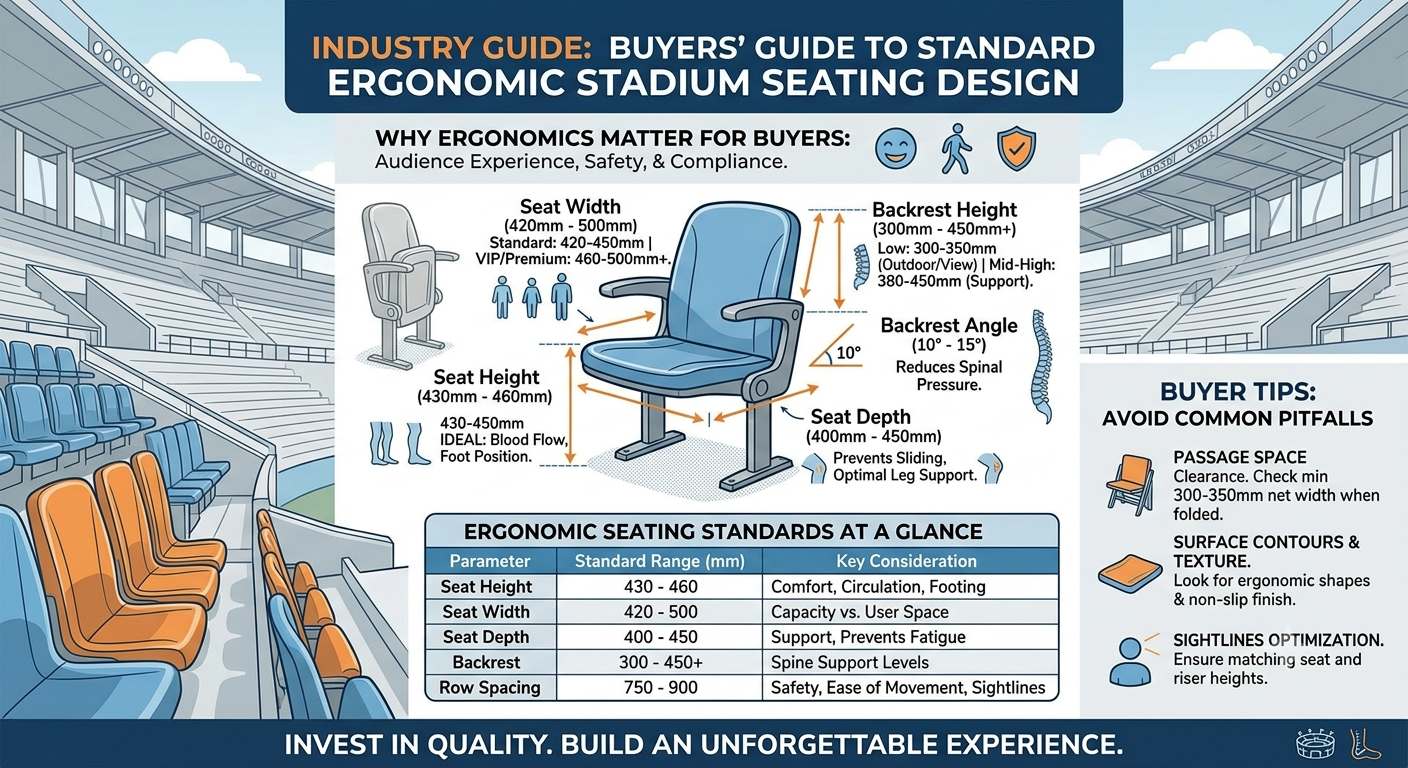
A well-designed ergonomic stadium seat typically features a seat pan angle of approximately 3° to 7°, either slightly forward or backward tilted. This helps reduce pressure on the thighs and improves blood circulation.
In addition, the seat surface should be engineered to distribute body weight evenly, preventing discomfort caused by localized pressure points during long-term sitting.
Procurement focus:
Whether anti-fatigue structural design is documented
Whether long-duration sitting tests (1–3 hours or more) are available
2.2 Backrest Curve and Lumbar Support
Ergonomic stadium seating should not use a flat or rigid backrest. Instead, it must follow the natural "S-shaped curve" of the human spine:
Gentle inward lumbar support at the lower back
Stable contact in the mid and upper back region
Avoidance of hollow gaps or lack of support
This is especially important for school stadiums and multi-purpose halls where users include both teenagers and adults with different body types.
2.3 Seat Width and Shoulder Space
A standard ergonomic design usually follows these guidelines:
Seat width: 420mm–500mm depending on venue level
Individual seat separation to improve personal space
Avoidance of continuous bench-style seating that reduces comfort
From a procurement standpoint, seat width directly affects the balance between audience capacity and comfort level.
2.4 Legroom and Row Spacing
Ergonomics is not only about sitting comfort but also about ease of movement and accessibility.
Standard requirements typically include:
Row spacing: usually ≥ 750mm–900mm
Sufficient legroom to avoid contact with the front seat
Compliance with emergency evacuation and safety regulations
This is a critical factor in stadium approval, safety inspection, and final project acceptance.
2.5 Material Comfort and Environmental Adaptability
Material selection is also an essential part of ergonomic design:
PP plastic seats: UV-resistant, anti-aging, suitable for outdoor use
Upholstered seats: enhanced comfort for long-duration indoor use
Anti-slip surface textures: improve safety and prevent sliding
Procurement teams should also verify whether materials have passed weather resistance and fire-retardant testing standards.
Ergonomic Differences Across Application Scenarios
3.1 School Stadiums
- Focus on durability and safety
- Medium firmness for easy maintenance
- Basic ergonomic comfort design
3.2 Professional Sports Stadiums
- Higher emphasis on spectator experience
- More refined seat angle optimization
- Strict requirements for sightlines and spacing
3.3 Multi-Purpose Event Venues
- Often equipped with padded or folding seats
- Designed for long-duration comfort
- Must support both sports events and conferences
How Procurement Teams Evaluate Ergonomic Compliance
During bidding and procurement, buyers should focus on the following aspects:
Whether detailed ergonomic design parameters are provided (not just marketing claims such as "comfortable")
Whether real installation references are available (schools, stadiums, government projects)
Whether third-party safety and structural test reports are provided
Whether customization options for spacing and dimensions are supported
Whether long-term user feedback or performance data is available
A professional supplier should be able to provide engineering-level documentation rather than simple product images.
Conclusion: Ergonomic Design Determines Long-Term Value
From a procurement perspective, ergonomic stadium seating is not just about comfort. It directly impacts:
Stadium utilization rates
Brand image of the venue
Long-term maintenance costs
Compliance with safety standards
Therefore, when selecting a supplier, buyers should not focus solely on price or appearance. Instead, they should carefully evaluate whether the ergonomic design truly meets international standards and real-world usage requirements.
In modern stadium development, high-quality ergonomic seating should be viewed as an investment in spectator experience rather than a simple furniture purchase.
Author Profile: Guangzhou Smart Sports Industrial Co., Ltd.