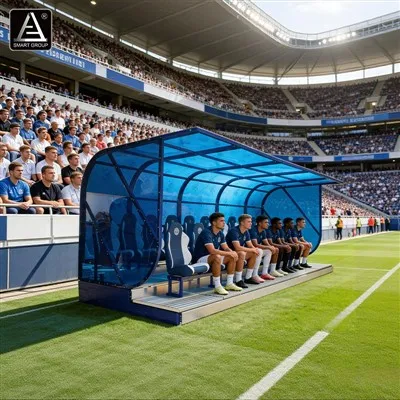
In modern football stadium design, substitute bench shelters-also known as dugouts or team shelters-play an essential role in protecting players and coaching staff from sun, wind, and rain. The performance, durability, and appearance of these structures depend heavily on the materials used. Different materials offer different advantages in terms of safety, visibility, weather resistance, and lifespan.
This article explores the most common materials used in football substitute bench shelters and explains why they are widely adopted in professional stadium projects.
Aluminum Alloy Frames: Lightweight and Corrosion-Resistant Structure
Aluminum alloy is one of the most widely used structural materials for modern dugout shelters. It is favored because of its excellent strength-to-weight ratio and strong corrosion resistance.
Unlike traditional steel, aluminum does not rust, making it ideal for outdoor stadium environments exposed to rain, humidity, and coastal air. It also reduces the overall weight of the shelter, which simplifies installation and transportation.
In addition, aluminum frames are highly flexible in design. Manufacturers can extrude complex profiles to integrate seating rails, panel grooves, and roof support structures. Powder coating is often applied to improve aesthetics and further enhance durability.

Galvanized Steel: High Strength for Heavy-Duty Applications
For large stadiums or permanent installations, hot-dip galvanized steel remains a popular choice. Its main advantage is exceptional structural strength, allowing shelters to withstand strong wind loads and potential impact in high-traffic environments.
The galvanization process coats the steel with a protective zinc layer, significantly improving its resistance to corrosion. This makes it suitable for long-term outdoor use with minimal maintenance.
Steel structures are often used in combination with aluminum or polycarbonate panels. While heavier than aluminum, steel provides unmatched stability, especially in large-capacity stadium seating areas.
Polycarbonate Panels: Impact-Resistant Transparent Roofing
Polycarbonate is the most common roofing material used in modern substitute bench shelters. It is a high-performance thermoplastic known for its transparency and durability.
One of its key advantages is impact resistance. Polycarbonate sheets are nearly unbreakable under normal sports facility conditions, making them safer than glass. They also provide excellent UV protection, blocking harmful ultraviolet rays while still allowing natural light to pass through.
Available in clear, tinted, or UV-coated versions, polycarbonate panels help maintain visibility for spectators and broadcasters while offering comfort to players seated inside the shelter.
PVC and UV-Resistant Fabric Covers: Flexible and Cost-Effective Solution
In some lightweight or portable dugout systems, PVC-coated polyester fabric is used as a roofing or side-cover material. This option is highly flexible and cost-effective, making it suitable for training fields, school sports grounds, and temporary stadium setups.
The fabric is treated with UV-resistant and waterproof coatings, ensuring reliable protection against sun and rain. Although not as durable as polycarbonate or glass, it offers excellent portability and ease of replacement.
Its lightweight nature also reduces structural load requirements, allowing simpler frame designs.
Tempered Glass Panels: Premium Visibility for Professional Stadiums
Tempered glass is occasionally used in high-end stadium dugout designs where aesthetics and visibility are a priority. It offers crystal-clear transparency and a premium architectural appearance.
Compared to standard glass, tempered glass is heat-treated to increase strength and safety. When broken, it shatters into small, blunt pieces rather than sharp shards, reducing injury risk.
However, due to its weight and cost, it is less commonly used than polycarbonate. It is typically reserved for elite stadium projects where design and branding are key considerations.
FRP (Fiberglass Reinforced Plastic): Durable and Weather-Resistant Panels
FRP panels are another important material used in dugout shelters, especially for side and rear enclosures. They combine fiberglass reinforcement with resin to create a strong, lightweight, and weather-resistant material.
FRP is highly resistant to moisture, corrosion, and chemical exposure, making it suitable for long-term outdoor use. It can also be molded into curved or customized shapes, giving designers more flexibility in stadium aesthetics.
Its opaque or semi-transparent finish helps reduce glare while still providing protection from wind and rain.
Seating Materials: HDPE and PU Upholstery for Comfort
Inside the shelter, seating materials also play a crucial role. High-Density Polyethylene (HDPE) is commonly used for molded stadium seats due to its durability, UV resistance, and easy maintenance.
For premium installations, PU (polyurethane) cushioned seats are used to provide additional comfort for players and coaching staff during matches. These materials are designed to withstand continuous outdoor exposure while maintaining structural integrity and color stability.
Conclusion
The construction of football substitute bench shelters relies on a combination of advanced materials, each selected for specific performance requirements. Aluminum and galvanized steel provide structural strength, polycarbonate ensures safe and transparent roofing, while PVC, FRP, and glass offer different levels of protection, flexibility, and visual appeal.
Choosing the right combination of materials depends on stadium level, climate conditions, budget, and design expectations. As modern sports infrastructure continues to evolve, material innovation will remain at the core of improving durability, comfort, and overall match experience for players and teams.
Author Profile: SMART GROUP - Global Sports Facility Solution Provider