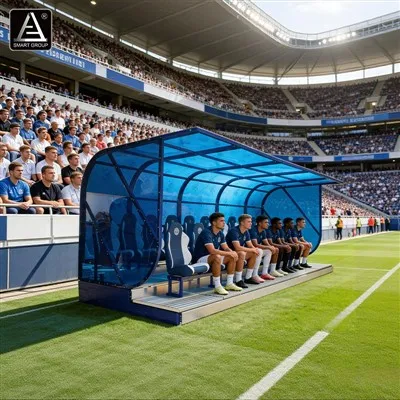
A professional football stadium is defined not only by its pitch, lighting, and spectator stands, but also by the quality and functionality of its player and coaching facilities. Among these, the substitute bench system-also known as the dugout-is a critical component that directly affects team performance, match-day organization, and overall stadium professionalism.
For stadium owners, contractors, and sports facility planners, understanding the full configuration of a standard football team bench is essential when selecting or specifying equipment for new builds or renovation projects. Below is a comprehensive overview of the typical structure, materials, features, and optional upgrades found in modern professional bench systems.
Structural Frame System
The structural frame forms the backbone of the entire dugout system. It is engineered to provide long-term stability, safety, and resistance to outdoor environmental conditions.
Most professional bench structures are manufactured using high-strength steel (Q235B or equivalent) or aluminum alloy profiles. These materials ensure both durability and structural rigidity under continuous use.
Key characteristics include:
· Powder-coated or hot-dip galvanized steel for corrosion resistance
· Anti-rust and anti-aging surface treatment
· Modular or fully welded construction options
· Wind-load and impact resistance engineering
· Compliance with international stadium safety standards
High-end stadium installations often prefer fully galvanized steel frames, offering a service life exceeding 20 years with minimal maintenance requirements.

Polycarbonate or Tempered Glass Shelter Cover
The roof structure provides essential protection for players, coaching staff, and substitutes during matches in varying weather conditions. It also contributes significantly to the visual identity of the stadium.
Common materials include UV-resistant polycarbonate sheets or tempered safety glass panels. Polycarbonate is widely used due to its lightweight nature, impact resistance, and cost efficiency, while tempered glass is typically reserved for premium stadium projects.
Key features include:
· UV protection to reduce heat exposure
· Anti-glare and weather-resistant coating
· Curved aerodynamic roof design for wind resistance
· Optional tinted or transparent finishes
Integrated drainage system to prevent water accumulation
The shelter is designed not only for functionality but also to align with modern stadium aesthetics and broadcasting visibility requirements.
Player Seating System
Seating is one of the most important comfort-related components of a substitute bench system. Players and coaching staff may spend long periods seated during matches, making ergonomics and durability essential.
Standard seating configurations include:
· Individual molded bucket seats or ergonomic high-back seats
· HDPE (High-Density Polyethylene) or cushioned upholstered padding
· Foldable tip-up mechanism for space optimization
· Backrest and lumbar support for improved comfort
· Optional armrests for professional team installations
A typical bench section accommodates between 7 and 23 seats depending on stadium design and league requirements. Elite clubs may also request advanced features such as heated seating systems, ventilation, or premium leather finishes.
Flooring and Base Platform
The flooring structure ensures safety, drainage, and long-term structural integrity. It also serves as the foundation supporting seating and shelter components.
Common materials include anti-slip aluminum decking, marine-grade plywood with PVC coating, or reinforced steel plates. Many systems also incorporate raised flooring designs to improve ventilation and prevent water accumulation.
Important design considerations include:
· Anti-slip surface treatment for safety in wet conditions
· Integrated drainage channels for rainwater management
· Load-bearing capacity designed for multiple occupants
· Corrosion-resistant base structure for outdoor durability
Proper flooring design reduces maintenance costs and significantly extends the lifespan of the entire bench system.
Side Panels and Branding Areas
Modern stadium benches are not only functional structures but also important branding platforms. Side panels can be customized to enhance club identity or sponsor visibility.
Typical options include:
· Transparent or tinted polycarbonate side walls
· UV-printed sponsor branding panels
· Club logo integration areas
· Removable or sliding panel systems for maintenance access
· Anti-vandal protection coatings for public stadiums
These elements are especially important for televised matches, where visual presentation plays a key role in commercial value.
Optional Functional Upgrades
Depending on project requirements, substitute benches can include additional features such as:
· LED lighting systems for night matches
· Integrated ventilation or cooling fans
· USB charging ports and control consoles
· Medical storage compartments
· Electric or removable modular design for transport
These upgrades are commonly found in professional leagues and international venues.
Installation Types and Structural Flexibility
Installation methods vary depending on stadium requirements, budget, and long-term usage plans.
Common installation types include:
· Fixed foundation installation with embedded anchor bolts (most common for stadiums)
· Modular bolt-connected systems for easy replacement and expansion
· Portable or mobile dugouts for training grounds and temporary venues
Proper installation ensures structural safety, alignment with stadium layout, and compliance with sports federation regulations.
Maintenance, Lifespan, and Procurement Considerations
A high-quality football bench system is designed for low maintenance and long-term durability. Galvanized or powder-coated steel structures significantly reduce corrosion risks, while modular designs simplify replacement of individual components.
When selecting a supplier, key procurement factors include:
· Material certification and load testing reports
· Weather resistance and anti-corrosion performance
· Seating ergonomics and customization options
· Installation support and after-sales service
· Warranty period and lifecycle cost efficiency
Conclusion
A standard football substitute bench system is a highly engineered sports facility product that combines structural strength, weather protection, ergonomic seating, and optional smart features. Far beyond a simple shelter, it plays a vital role in supporting team performance, ensuring player comfort, and enhancing the professional image of a stadium.
For stadium developers and sports facility buyers, investing in a well-designed dugout system ensures long-term durability, operational efficiency, and a higher standard of match-day experience.
Author Profile: Guangzhou Smart Sports Industrial Co., Ltd.