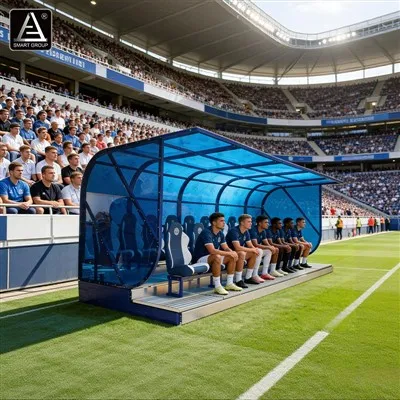
When planning stadiums, schools, or sports facilities, one of the most important decisions is choosing between aluminum grandstands and steel grandstands. While both serve the same functional purpose-providing safe and durable spectator seating-their cost structures differ significantly. Understanding these differences requires looking beyond initial purchase price and considering long-term performance, maintenance, and installation factors.
Initial Material and Manufacturing Cost Differences
At the beginning of any project, steel grandstands generally appear more cost-effective. Structural steel (such as Q235 or similar grades) is widely available and has a lower raw material price compared to aluminum alloys used in load-bearing seating systems. Steel fabrication processes are also well-established and often less expensive in terms of unit production cost.
Aluminum, however, requires more specialized alloys and precision extrusion or fabrication techniques. This increases the upfront manufacturing cost. In most market comparisons, aluminum grandstands can be approximately 15% to 40% more expensive upfront than equivalent steel structures, depending on design complexity and load requirements.

Transportation and Installation Cost Efficiency
Although steel is cheaper to produce, it is significantly heavier. This weight difference directly impacts transportation and installation costs. Steel structures often require more trucks, heavier lifting equipment, and longer installation time on-site.
Aluminum grandstands are much lighter, sometimes reducing structural weight by up to 50%–60%. This leads to lower logistics costs, faster assembly, and reduced labor requirements. In remote or multi-site projects, these savings can become substantial and partially offset the higher material cost of aluminum.
In practice, installation cost savings for aluminum systems can range from 10% to 25% compared to steel depending on project scale.
Foundation and Structural Support Requirements
Another hidden cost factor is the foundation system. Steel grandstands impose higher loads on the ground due to their weight. This often requires stronger foundations, deeper concrete work, or reinforced support structures, which increases civil engineering costs.
Aluminum grandstands, being lighter, reduce ground load requirements. This allows for simpler foundation designs and can significantly lower civil construction budgets. For temporary venues or modular stadiums, this advantage becomes even more important.
In some projects, foundation savings alone can reduce total construction costs by 5% to 15%, depending on soil conditions and design height.
Maintenance and Lifecycle Cost Differences
Long-term maintenance is where aluminum often demonstrates a strong economic advantage. Steel structures require regular anti-rust treatment, repainting, and inspections, especially in humid, coastal, or outdoor environments. Over time, corrosion protection adds recurring operational costs.
Aluminum, on the other hand, naturally resists corrosion due to its oxide layer. It requires minimal surface treatment and significantly lower maintenance frequency. Over a 10–20 year lifecycle, maintenance savings can become substantial.
From a lifecycle cost perspective, aluminum structures may reduce total maintenance expenses by 30% to 60% compared to steel, making them more cost-efficient in the long run despite higher initial investment.
Durability, Service Life, and Replacement Cycles
Steel grandstands are strong and highly load-bearing, but their service life depends heavily on maintenance quality. In aggressive environments, corrosion can shorten lifespan and lead to earlier refurbishment or replacement.
Aluminum structures are highly resistant to environmental degradation and maintain structural integrity over long periods with minimal intervention. This extends their effective service life and reduces replacement frequency.
When evaluated over a 15–25 year lifecycle, aluminum often delivers better total value due to fewer repair cycles and lower risk of structural deterioration.
Overall Cost Balance: Which One Is More Economical?
The real cost difference between aluminum and steel grandstands cannot be judged by purchase price alone. Steel remains the more economical choice for short-term budgets or indoor/controlled environments where corrosion risk is low. It is widely used for large-scale permanent stadiums where upfront savings are critical.
Aluminum, however, becomes more cost-effective in scenarios that prioritize long-term durability, low maintenance, fast installation, and flexible relocation. For schools, temporary venues, coastal stadiums, or multi-purpose facilities, aluminum often delivers a lower total cost of ownership.
In summary, steel may be 20%–40% cheaper initially, but aluminum can reduce lifecycle costs by 15%–35% overall, depending on environment and usage conditions.
Conclusion
Choosing between aluminum and steel grandstands is not simply a question of budget, but a balance between initial investment and long-term operational efficiency. Steel offers lower upfront costs, while aluminum provides advantages in maintenance, installation speed, and lifespan. The most cost-effective solution ultimately depends on project location, usage intensity, and expected service life.
Author Profile: Guangzhou Smart Sports Industrial Co., Ltd.