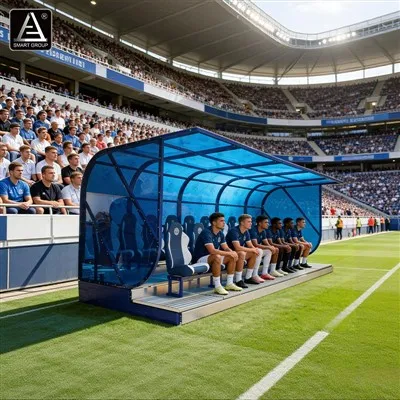
In modern stadium and multi-purpose venue construction, modular stadium seating systems have become an increasingly preferred solution due to their flexibility, efficiency, and adaptability. Compared with traditional fixed concrete stands, modular systems offer a faster, more scalable, and more cost-effective way to build spectator seating areas for sports facilities, schools, and event venues.
What Is a Modular Stadium Seating System?
A modular stadium seating system is a prefabricated grandstand structure composed of standardized, repeatable units that can be assembled, expanded, or reconfigured according to project requirements. These units typically include a steel support frame, stepped platforms, seat mounts, guardrails, stair access systems, and optional accessories such as aisles, wheelchair platforms, and roofing supports.
The key concept behind modular design is standardization. Each structural module is manufactured in a controlled factory environment, ensuring consistent quality and dimensional accuracy. These modules are then transported to the site and assembled like building blocks, allowing the entire seating structure to be installed without extensive on-site welding or concrete work.
Depending on the project needs, modular seating systems can be configured in different forms, such as fixed grandstands, portable bleachers, telescopic retractable seating systems, or hybrid multi-tier structures. This adaptability makes them suitable for both permanent stadium installations and temporary event venues.
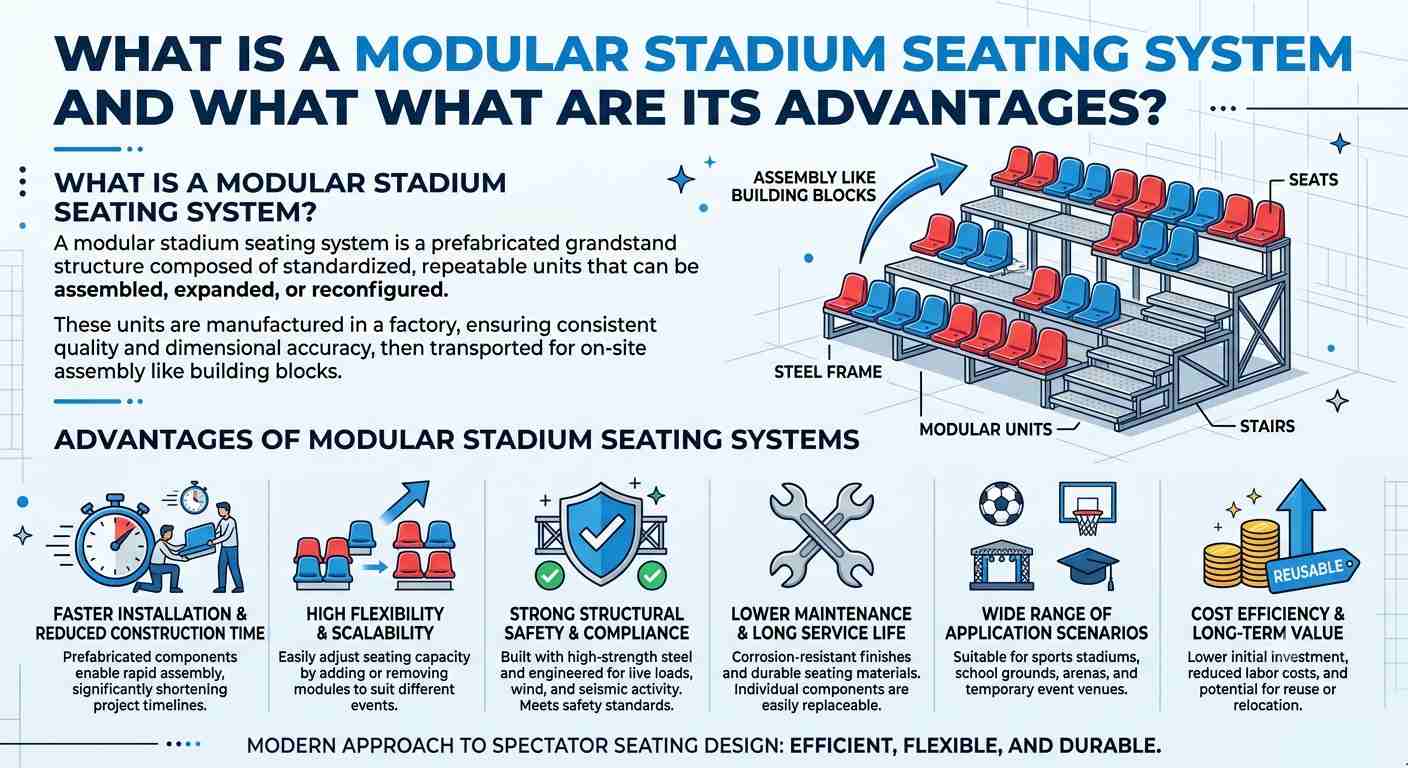
Advantages of Modular Stadium Seating Systems
1. Faster Installation and Reduced Construction Time
One of the most significant advantages of modular seating systems is their rapid installation process. Since most components are prefabricated in the factory, on-site construction is mainly focused on assembly rather than fabrication. This greatly reduces the need for heavy civil engineering work such as concrete pouring, curing time, and complex structural adjustments.
As a result, project timelines can be significantly shortened compared to traditional grandstands. This is especially valuable for sports facilities with tight deadlines, school stadium upgrades during vacation periods, or event venues that require quick setup before competitions or ceremonies.
2. High Flexibility and Scalability
Modular systems are designed to be highly adaptable. Seating capacity can be easily increased or decreased by adding or removing modules, making it possible to adjust the stadium layout according to different event requirements.
For example, a school sports field may initially install a small 200-seat structure, and later expand it to 1,000 seats for larger competitions. Similarly, modules can be reconfigured to create different seating angles, viewing distances, or multi-tier arrangements.
This scalability also supports long-term planning. Instead of investing in a large fixed structure from the beginning, operators can gradually expand the seating system as demand grows.
3. Strong Structural Safety and Compliance with Standards
Safety is a core consideration in stadium design. Modular seating systems are typically built using high-strength structural steel such as Q235B or equivalent grades, combined with anti-corrosion treatments like hot-dip galvanizing or powder coating.
Engineered designs take into account multiple load conditions, including live crowd loads, wind pressure, and potential seismic activity. Anti-slip stair surfaces, reinforced guardrails, and clearly defined evacuation routes are integrated into the structure to ensure safe crowd movement.
In professional-grade systems, design and manufacturing often follow international building and sports facility standards, ensuring reliable performance under heavy and continuous use.
4. Lower Maintenance Requirements and Long Service Life
Another key advantage of modular seating systems is their low maintenance demand. The use of corrosion-resistant steel structures and durable seating materials, such as HDPE plastic or upholstered seats, ensures long-term performance even in outdoor environments.
If damage occurs, individual modules or seat components can be replaced without dismantling the entire structure. This localized maintenance approach significantly reduces downtime and repair costs.
With proper installation and periodic inspection, modular systems can provide a long service life while maintaining structural integrity and visual appearance.
5. Wide Range of Application Scenarios
Modular stadium seating systems are not limited to large sports stadiums. They are widely used in various environments, including school sports grounds, university arenas, community sports centers, indoor gymnasiums, training facilities, and temporary event venues.
They are particularly effective in multi-purpose spaces where seating requirements change frequently. For example, a basketball court may require retractable seating for games, while the same space may be used for exhibitions or ceremonies at other times.
This versatility makes modular systems a practical solution for modern multi-functional facility planning.
6. Cost Efficiency and Long-Term Value
From a financial perspective, modular seating systems offer significant cost advantages. Reduced civil construction work lowers initial investment, while faster installation reduces labor and project management costs. Additionally, factory production improves material utilization and reduces waste.
Importantly, modular systems can often be reused or relocated, which increases their long-term return on investment. For venues that host seasonal or temporary events, this reusability provides a major economic benefit compared to permanent concrete structures.
Author Profile: Guangzhou Smart Sports Industrial Co., Ltd.