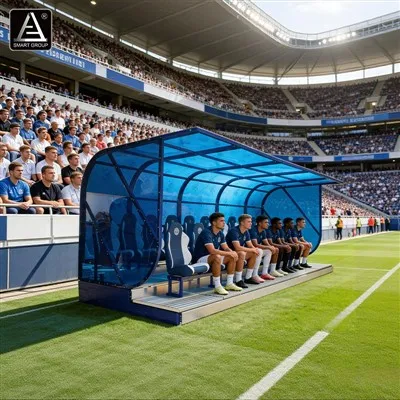
In both industry standards and the actual construction of large-scale outdoor stadiums, HDPE (High-Density Polyethylene) is strongly recommended.
While PP (Polypropylene) is also a common material for stadium seats, it is mostly utilized in indoor arenas or grandstands with extensive canopy coverage and mild year-round climates. For a 40,000-seat stadium completely exposed to natural elements (sun, rain, freezing cold, and extreme heat), HDPE offers an overwhelming advantage in outdoor weather resistance.
Core Differences in Outdoor Weather Resistance
1. Low-Temperature Resistance and Cold Brittleness (The Most Critical Difference)
· HDPE: Demonstrates exceptional low-temperature performance, with a embrittlement temperature as low as -100°C. This means that during harsh winters or sudden snowstorms, HDPE seats maintain excellent toughness and are highly resistant to cracking.
· PP: Highly sensitive to low temperatures. When the temperature drops to around or below 0°C, PP becomes highly brittle (known in the industry as cold brittleness). If fans jump on or accidentally impact the seats during an exciting match in cold weather, PP seats are prone to shattering or breaking, posing a severe safety hazard.
2. UV Resistance and Solar Aging
· HDPE: Features a more stable molecular structure with inherently better UV resistance. Under prolonged sun exposure, its molecular chains break down much slower, making it less prone to severe fading, chalking, or hardening.
· PP: Structurally more vulnerable to ultraviolet rays. Under direct sunlight, unmodified PP undergoes rapid photo-oxidative aging, causing the surface to quickly whiten, become brittle, and powder. Although anti-oxidants and UV absorbers can be added during production, the maximum UV lifespan of PP base material still lags significantly behind HDPE.
3. Impact Resistance and Long-Term Toughness
· HDPE: Known for its superb toughness and high impact strength. Even after years of exposure to wind and sun, it retains its elasticity and can effectively absorb impacts (such as spectators jumping or stamping).
· PP: While it offers good rigidity at room temperature (slightly harder than HDPE), it lacks long-term toughness. After a few years of outdoor weathering, its impact resistance drops drastically, making it susceptible to structural damage.
4. High-Temperature Resistance and Thermal Deformation
· PP: The main area where PP outperforms HDPE is heat resistance. PP has a higher melting point and heat deflection temperature (often above 100°C). Under intense summer heat and direct sunlight, PP seats maintain their rigidity better and are less likely to soften or warp.
· HDPE: Has a slightly lower melting point, meaning its rigidity can decrease under extreme heat. However, modern seat engineering completely compensates for this physical trait by utilizing hollow blow molding and strategic reinforcement rib designs.
HDPE vs. PP: At-a-Glance Comparison Table
| Attribute | HDPE (High-Density Polyethylene) | PP (Polypropylene) | Winner for Outdoor Stadiums |
| Outdoor Suitability | 🌟🌟🌟🌟🌟 (Top Choice) | 🌟🌟 (Best for Indoor/Sheltered) | HDPE |
| Low-Temp Resistance | Excellent (No brittleness at -100°C) | Poor (Prone to cracking below 0°C) | HDPE |
| UV Resistance | Strong (Stable molecular structure) | Weak (Prone to photo-aging) | HDPE |
| Impact / Durability | Exceptional (High toughness, long life) | Average (Becomes brittle with age) | HDPE |
| Rigidity / Hardness | Slightly lower (Compensated by design) | Higher (Rigid at room temp) | PP |
| Heat Resistance | Average | Excellent (High thermal distortion temp) | PP |
| Primary Process | Mostly Hollow Blow Molding | Mostly Injection Molding | - |
Pro Tips & Pitfall Avoidance for a 40,000-Seat Project
⚠️ Specify High-End Weather-Resistant Masterbatches Regardless of whether you choose HDPE or PP, for a massive 40,000-seat outdoor project, the bidding and manufacturing specifications must require the manufacturer to add sufficient proportions of antioxidants, anti-aging agents, and UV absorbers (such as UV-855). Plastic seats without adequate weather-resistant additives will deteriorate, fade, and degrade within just three summers.
The Golden Combination: Process + Structure For open-air outdoor grandstands, the most recommended solution is: HDPE material + Hollow Blow Molding. The hollow, double-walled structure not only provides a more comfortable, cushioned feel for spectators, but it also drastically slows down UV penetration into the core structural integrity of the seat. Even if the outermost layer experiences minor weathering after a decade, the inner layer continues to provide robust structural support. Conversely, injection-molded PP (single-layered) tends to snap or fracture completely once aged.
Large stadiums are iconic public landmarks, and the labor and scheduling costs for replacing or maintaining grandstand seating down the line are immense. To guarantee a 10+ year outdoor service life and ensure absolute safety under extreme weather conditions, hollow blow-molded HDPE is the industry-standard, safest, and most durable choice.
Author Profile: Guangzhou Smart Sports Industrial Co., Ltd.